
presents
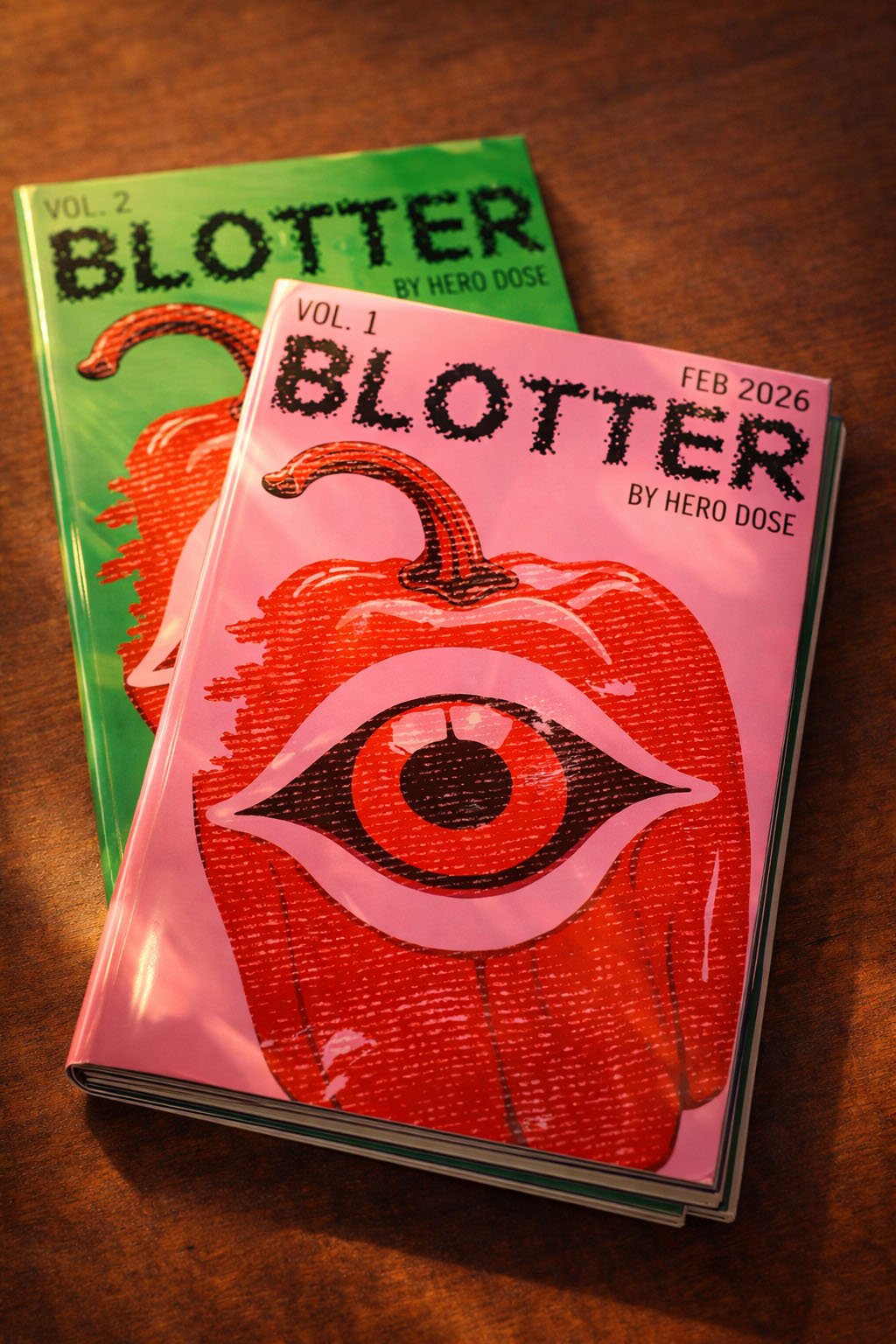
THE BLOTTER
a monthly heirloom chile newsletter





FEBRUARY 2026
Dear Dosers,
Its a new year and a new age.
With the long months of 2026 stretching out before us like a windy road through the mountains, we feel ready to spread the gospel of heirloom chiles farther and wider than ever before, and you’re first in line to be baptized in the red river.
Welcome to The Blotter, our monthly e-newsletter where we will be sharing updates, stories, interviews, tidbits, chuckles, brain-teasers, and recipes.
Follow us on instagram @herodosechileco for more!

Join our newsletter
Monthly field notes on rare heirloom chiles, recipes, and the quiet power of spice.
What is an Heirloom Chile?
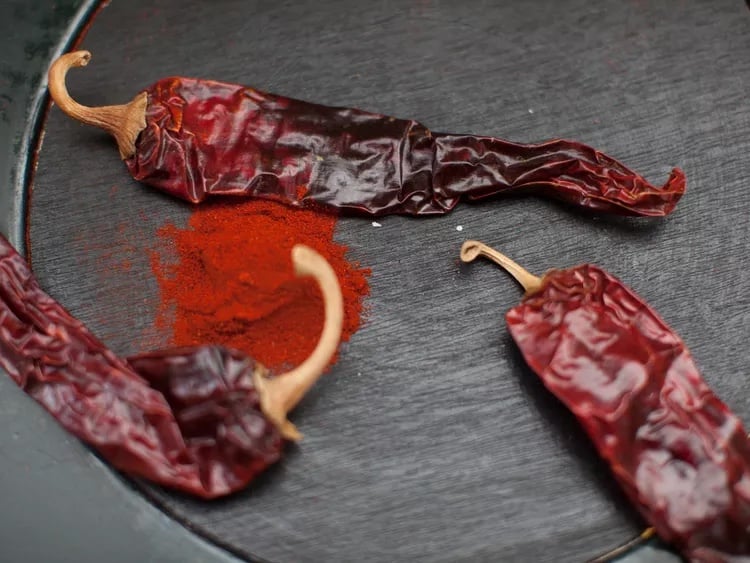
An heirloom chile is more than simply an older variety. It is a living record of place and time — a pre-industrial strain shaped by land, climate, and human hands over generations. Long before seed catalogs and standardized heat units, chiles traveled by trade, migration, and chance. Once rooted in a new place, they adapted. Soil and weather shaped them, and farmers selected the best of what survived. Our heirloom chiles are the result of a long conversation between people, plant, and landscape.
These chiles were shaped before modern agriculture flattened difference. They were selected not for uniformity or yield, but for flavor, usefulness, and survival within a specific way of life. Families saved seed from plants that cooked well, stored properly, fit local cuisines, and matured within local seasons. Heirloom chiles are not static relics, but the accumulated result of many small human decisions over time, environmental pressures, and the sacred relationships between land, air, and water — the local terroir that continues to shape them.
FIELD NOTES
In Search of the Chimayó Chile
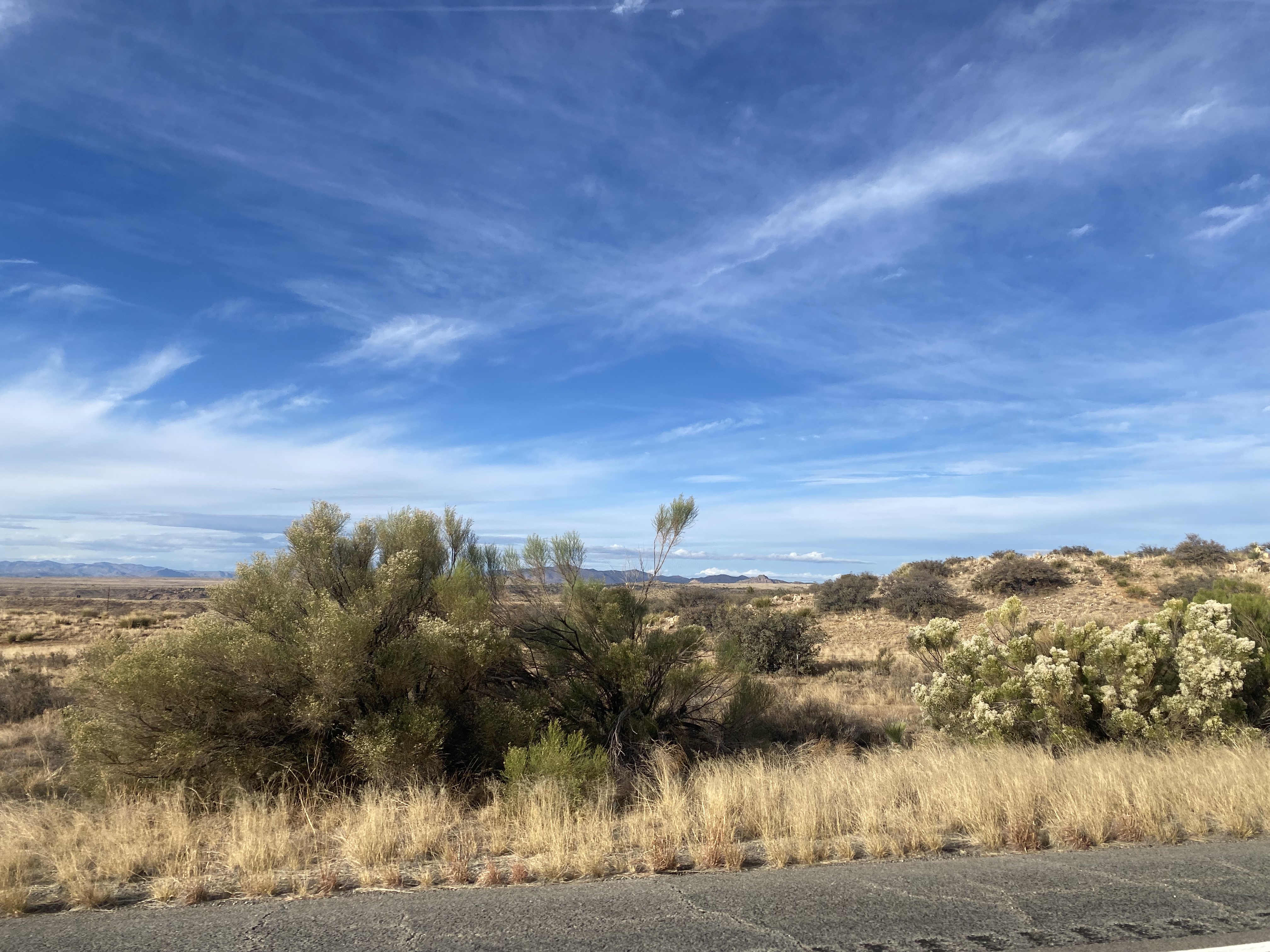
We arrive in the small pueblo of Chimayó the slow, winding way down off the frontage road, where the valley sighs and the land seems to exhale into a still, quiet air.
When our ’93 Mitsubishi Delica parks and the dust settles, the town reveals itself gradually — coming into focus through blinks in the high desert sunlight. A small town square. A few low buildings. Nothing announces itself all at once.
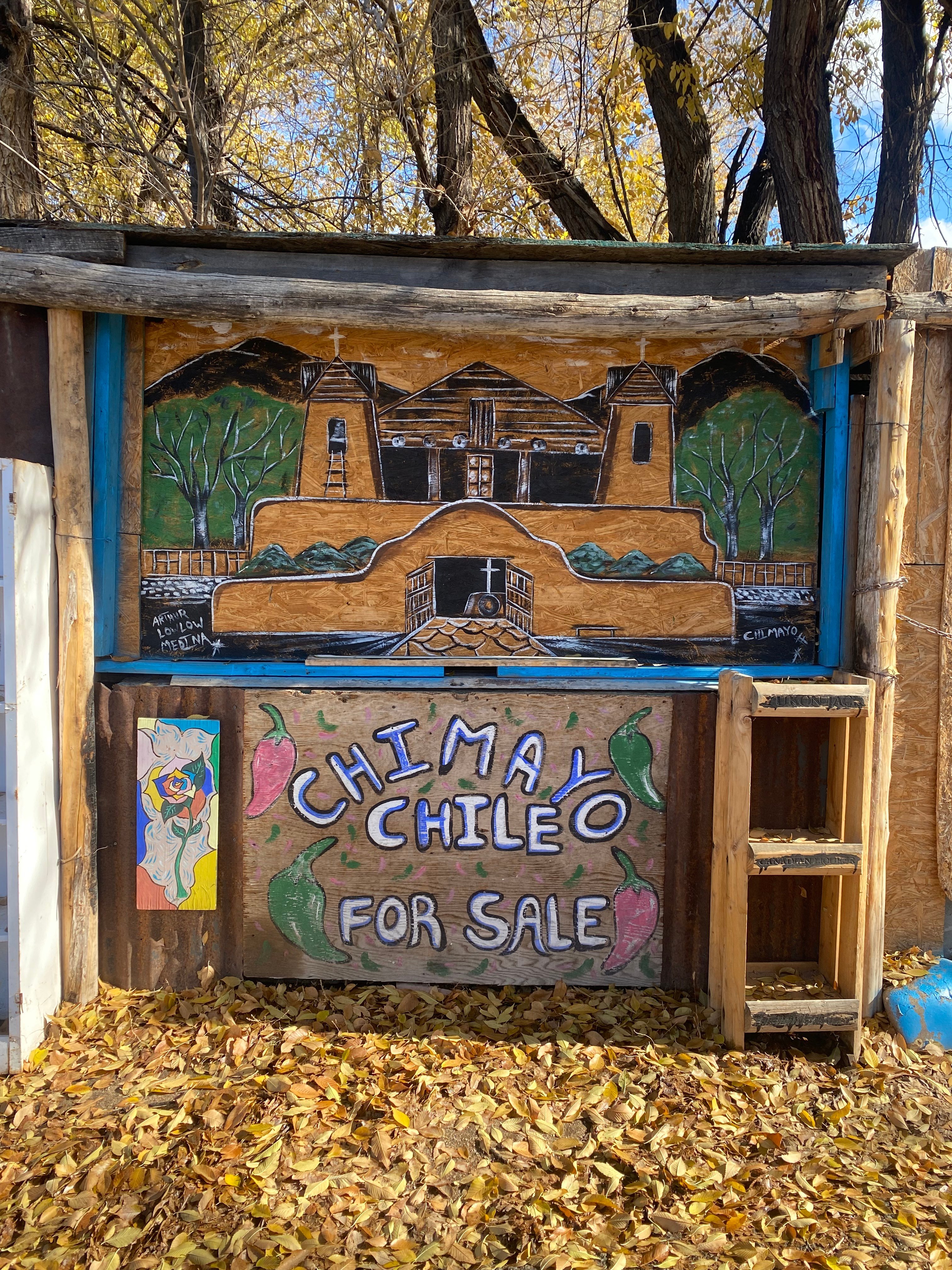
On the main stretch, the tourist shops are modest but unmistakable in their purpose. Ortega’s weaving shop down the road still produces rugs, jackets, and shawls in the distinctive geometric repeating patterns of red, black, and turquoise — a family business more than a century old. Ristras, strings of dried chiles, line the storefronts. Inside the shops Chimayó chile sells for fifty, sometimes a hundred dollars a pound. The price is unremarkable. The chile is the main attraction here. Everything else orbits it.
Along the edges of the square, men set up folding tables for a few hours at a time, selling their own mixes of caribe chile and chile-dusted corn nuts. Plastic bags knotted tight. Handwritten signs. Red powder catches the light and sparkles faintly in the sun, like the valley itself is still sifting something fine through its fingers. The air smells warm, mineral, faintly sweet. There’s a quiet sense of completion in the place — not a town waiting to become something else, but one that long ago decided what mattered.
The Santo Niño appears everywhere. The small child Christ — not the infant, not the man sacrificed for our sins, but the traveling child, filled with self-assurance and optimism of a young pilgrim. He watches over the sick and infirm who pass through hoping to touch the holy dirt. The story begins centuries earlier, in Moorish Spain, with prisoners, night journeys, and a child who walks barefoot bringing food and comfort where adults were forbidden to go. That story crosses oceans. It moves north. And here, in this quiet valley, it abides.
The pit of holy dirt sits quietly inside the sanctuary. It reflects an indigenous understanding of land as healing, later enclosed by Catholic ritual. Institutions change. The soil does not.
Just off the main road, slightly back from the square, we find the gallery. Patricio J. Chavez keeps it understated. Soft light. Spare shelves. And there, laid out without ceremony, are the chiles — full red Chimayó pods bagged simply, a sight to behold. They seem to glow when turned, sparkling as if dusted with flakes of fool’s gold. Thin-skinned. Dense. Purpose-built by constraint.
He has green Chimayó too — verde powder, rare and fleeting, caught at a moment most people never see. It smells bright and deep at once, like something harvested early because it knows the season is narrow. Roasted and cured by air-drying.
Chimayó was established by Spanish settlers in the late seventeenth century, part of the northernmost reach of colonial New Spain. After the indigenous Pueblo Revolt of 1680, Spanish authority withdrew from the region entirely, leaving small settlements and forts to fend for themselves. Decades later, people returned. The town endured — passing from Spain to the Mexican Republic, and then to the United States, each shift of power leaving layers behind. It’s not unusual here for people to speak with pride about their Spanish heritage, a distinction that feels both deeply personal and historically unstable in a place shaped by successive empires, none of which stayed cleanly put.
The church sits nearby, formed of the kind of gnarled wooden beams Disney would love to have copied (and maybe did). Built in 1816, it rises over ground that was already then believed to heal. Inside, the walls are crowded with offerings: photographs, handwritten notes, crutches, and shoes — hundreds of them — old and new, child-sized and worn thin, hung in rows and clusters. Shoes marking passage. Shoes marking return. Shoes as evidence that a body made it through.
It’s impossible not to think of other walls of shoes, other histories where movement and survival were counted this same way. Here, the meaning is safe passage. A journey completed. A body carried through, coat on its back, shoes still intact.
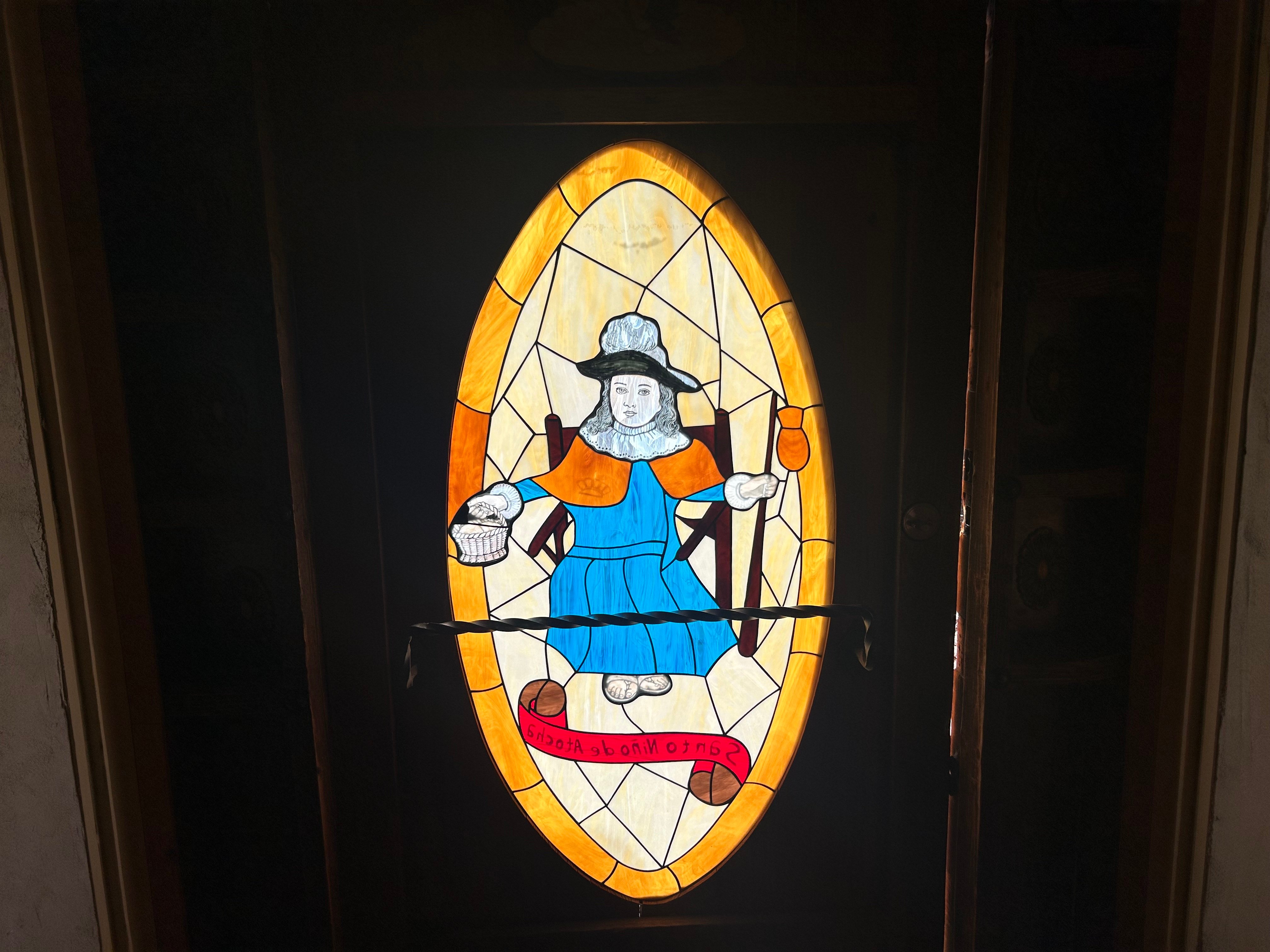
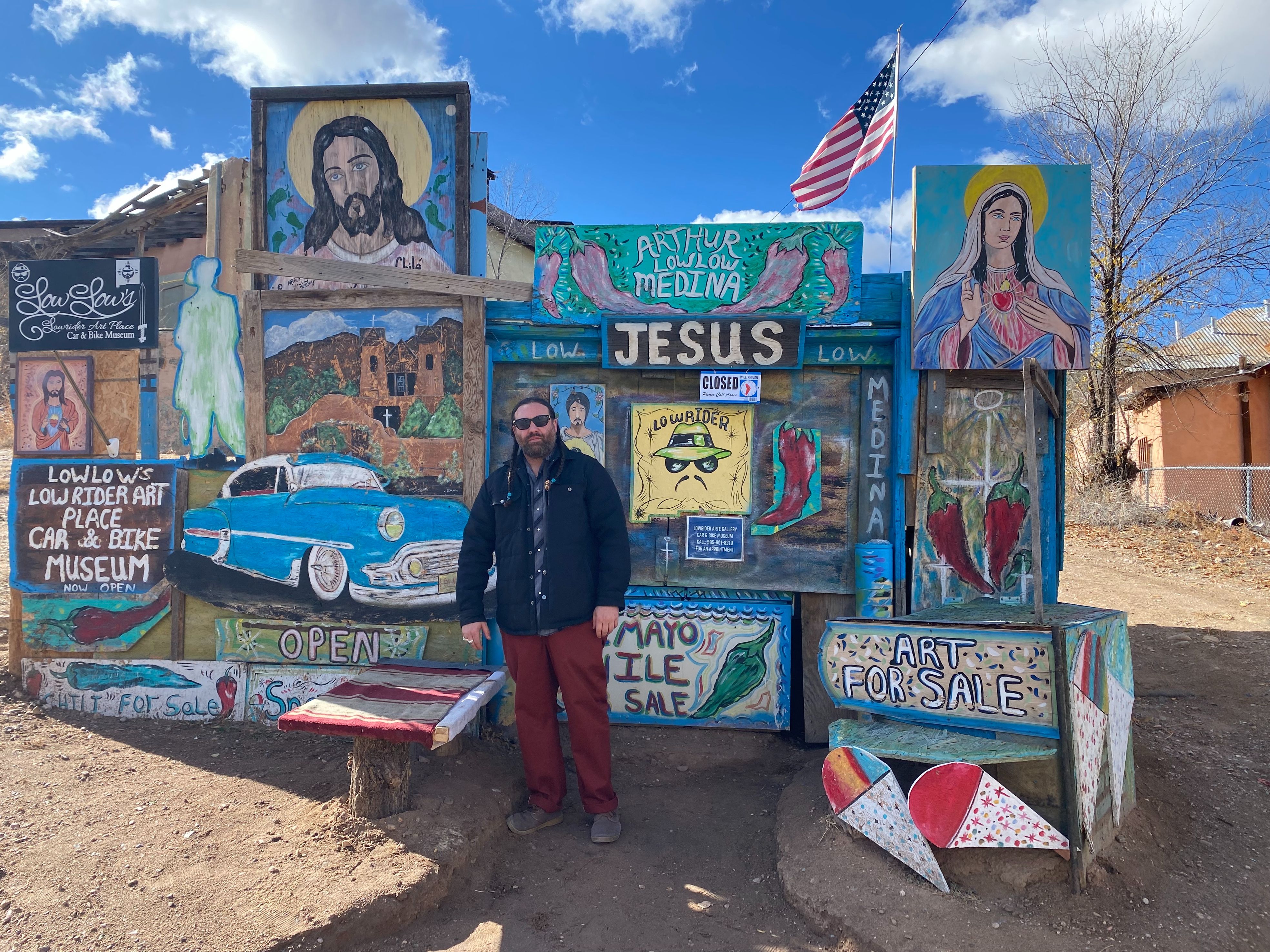
When we give Patricio a small dropper of our tincture, made just up the road in Nambé, he turns it once in the light and talks about how the chile changes when it leaves the valley — how the sweetness goes first, how the edges sharpen, how it forgets itself. After a few generations elsewhere, he says, the walls thicken, the heat climbs, and the flavor thins. The chile survives. The character doesn’t.
The Spanish carried chile here centuries ago from deeper in the New World, already ancient by the time it reached this valley. Over the next four hundred years it learned this place slowly. The unusually long days at altitude. The late-season sun. The narrow window between ripening and frost. It adapted by becoming thinner-skinned, sweeter, more precise.
The Santo Niño presides. The child god. The pilgrim. And outside, in the same valley, the chile makes its own crossing.
Later, it feels less like an exchange than a loop closing. The church sanctifies the soil one way. The chile does it another. Both remain. Both are worked by hand. And both make the same quiet claim:
What endures is not what travels farthest, but what survives by belonging.
Subscribe to The Blotter!
Get exclusive free updates, stories and recipes on our monthly newsletter.
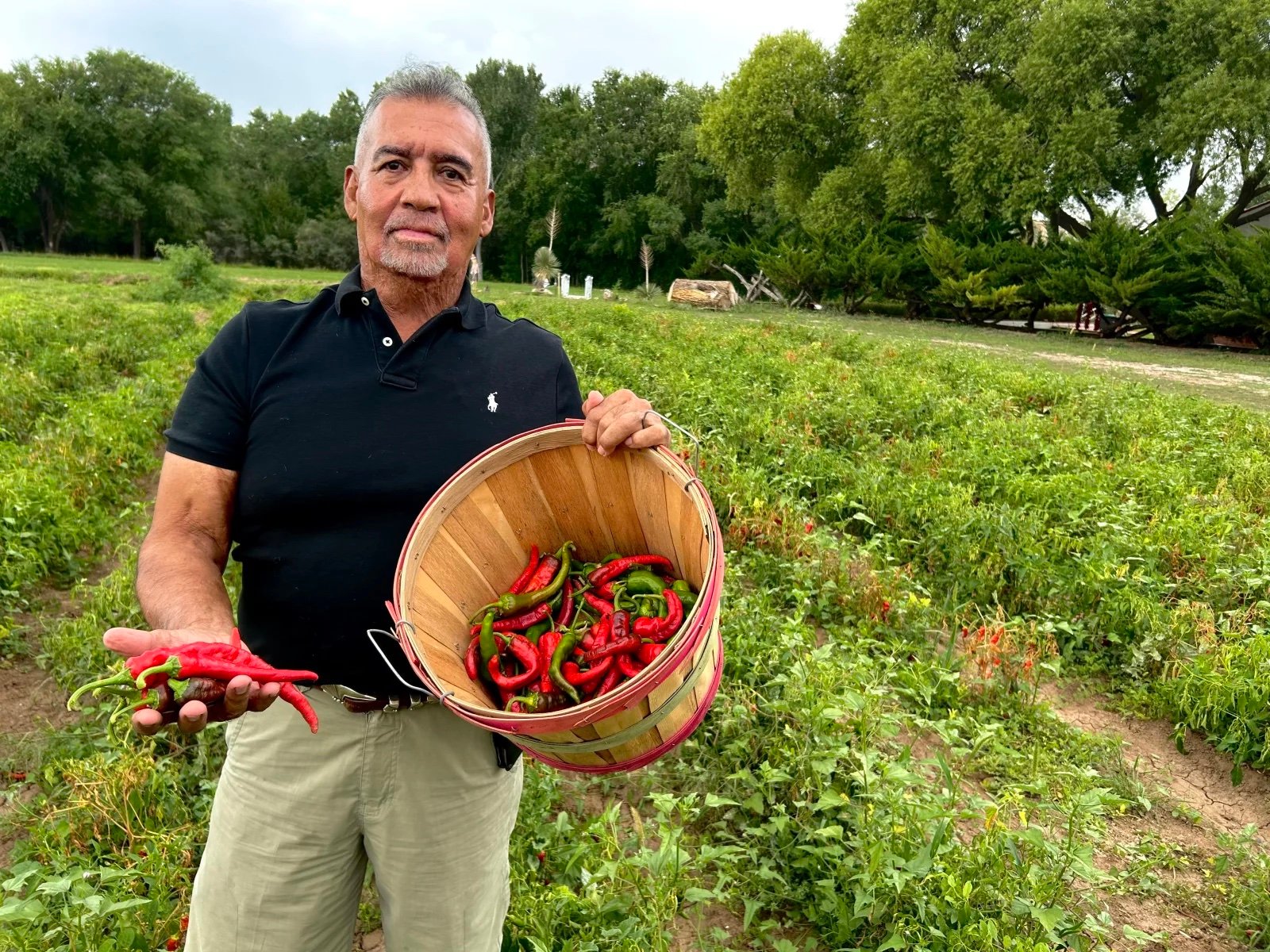
A rare treat getting rarer: Chimayo Red, New Mexico's "Holy Chile"
September 21, 20245:00 AM ET
Heard on Weekend Edition Saturday
NEW PRODUCTS
Hero Dose T-Shirts!
We love to hear feedback and field requests from all the Dosers out there surfing the ’Net, and this year we’re starting to tackle a few “big ones” and “bucket listers.”
Many of you have requested a Dose flavor so spicy that you have to keep it in a little glass case with a tiny hammer attached with a tiny chain and a sign that says “Break Only in Event of SPICE Emergency.” The Dose listened close and is currently in the H.D. Alchemical Laboratory refining a triple XXX-tra Hot heirloom flavor guaranteed to awaken your spirit body — and frankly may even cause it to break out in spirit hives.
Some of you also told us that you are getting cold and would love some way of protecting your torso from the wind or other elements. At first we didn’t understand this one. After a few follow-up questions, we realized the problem: YOU AREN’T WEARING A SHIRT.
Well, Dosers, this one’s easy. Hero Dose T-Shirts are now available in two unhinged designs.
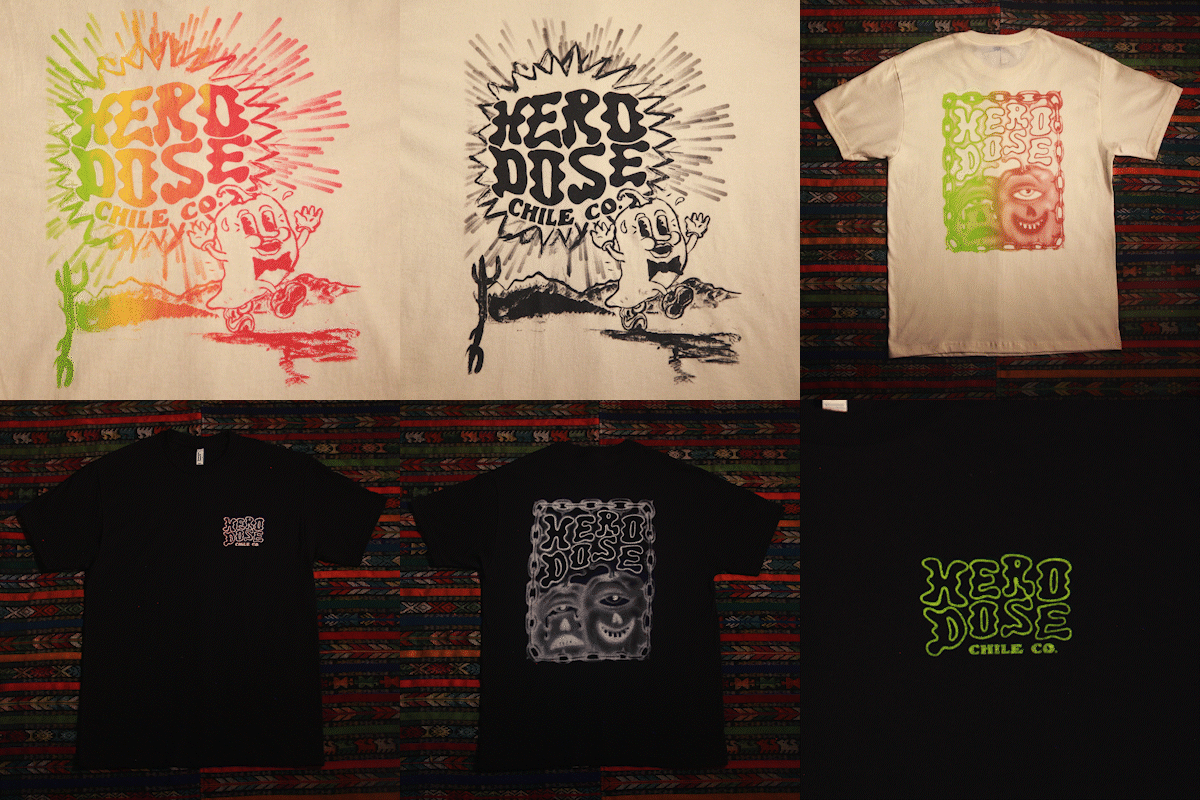

Hero Dose Limited Edition T-Shirt"Chileman Sunshine" Multicolor Custom screenprint on 100% cotton heavyweight tee Artwork by Loren Burke @pippy_pippio

Hero Dose Limited Edition T-Shirt "Laugh Now Cry Later" Multicolor Custom screenprint on 100% cotton heavyweight tee Artwork by Will Maloney @4liens_4re_4ngels
RECIPE CORNER
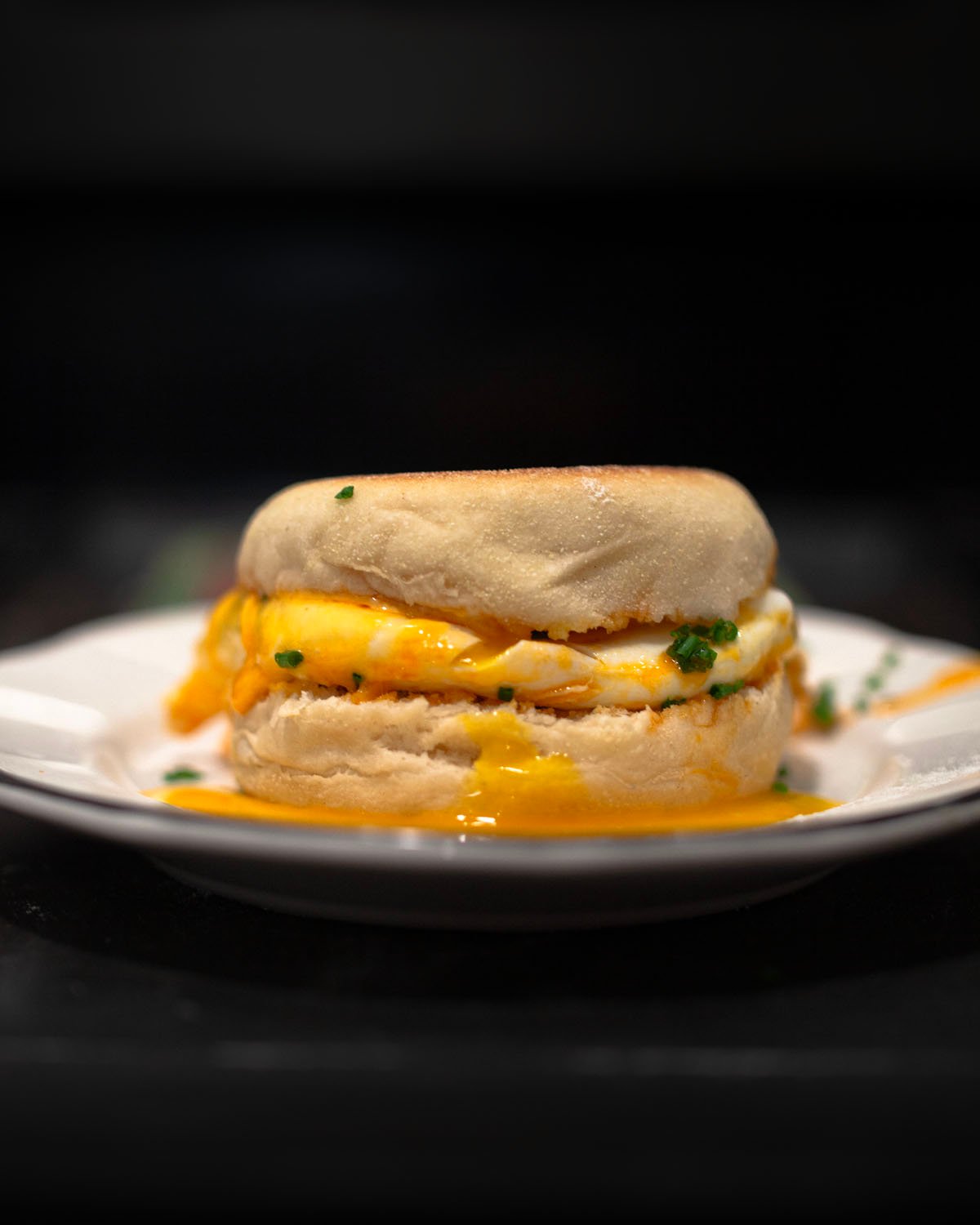
Hero Dose Breakfast Sando Mk. I
It has been said by many wise sages, bad hombres, high-achieving magicians, and P.E. coaches alike that breakfast is the most important meal of the day. This remains true whether that breakfast happens first thing in the morning, late into the afternoon, or at 3am while blasting Coast to Coast with George Noory, doing dishes in your underwear, and descending into paranoia. The Dose is here to help.
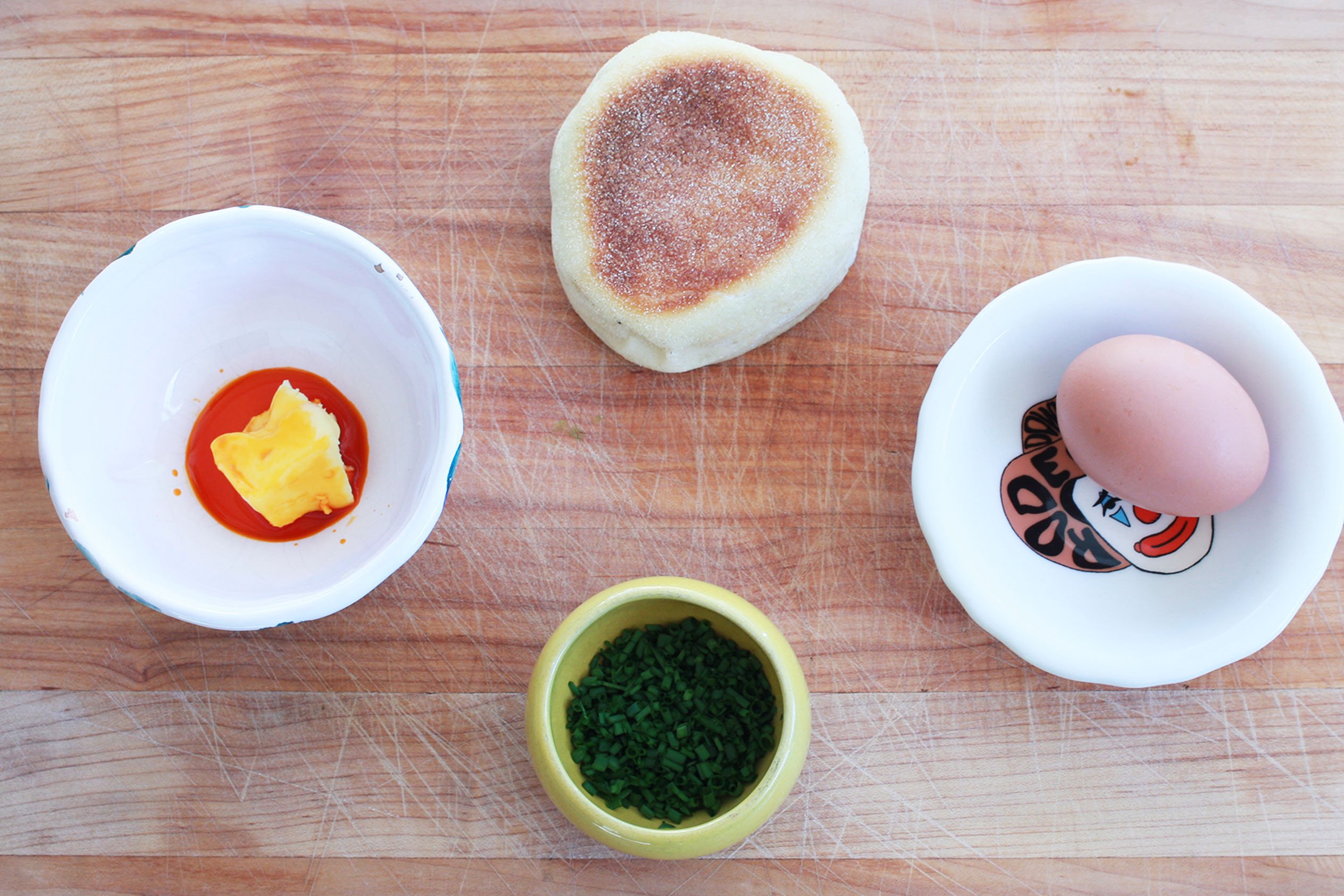
Ingredients
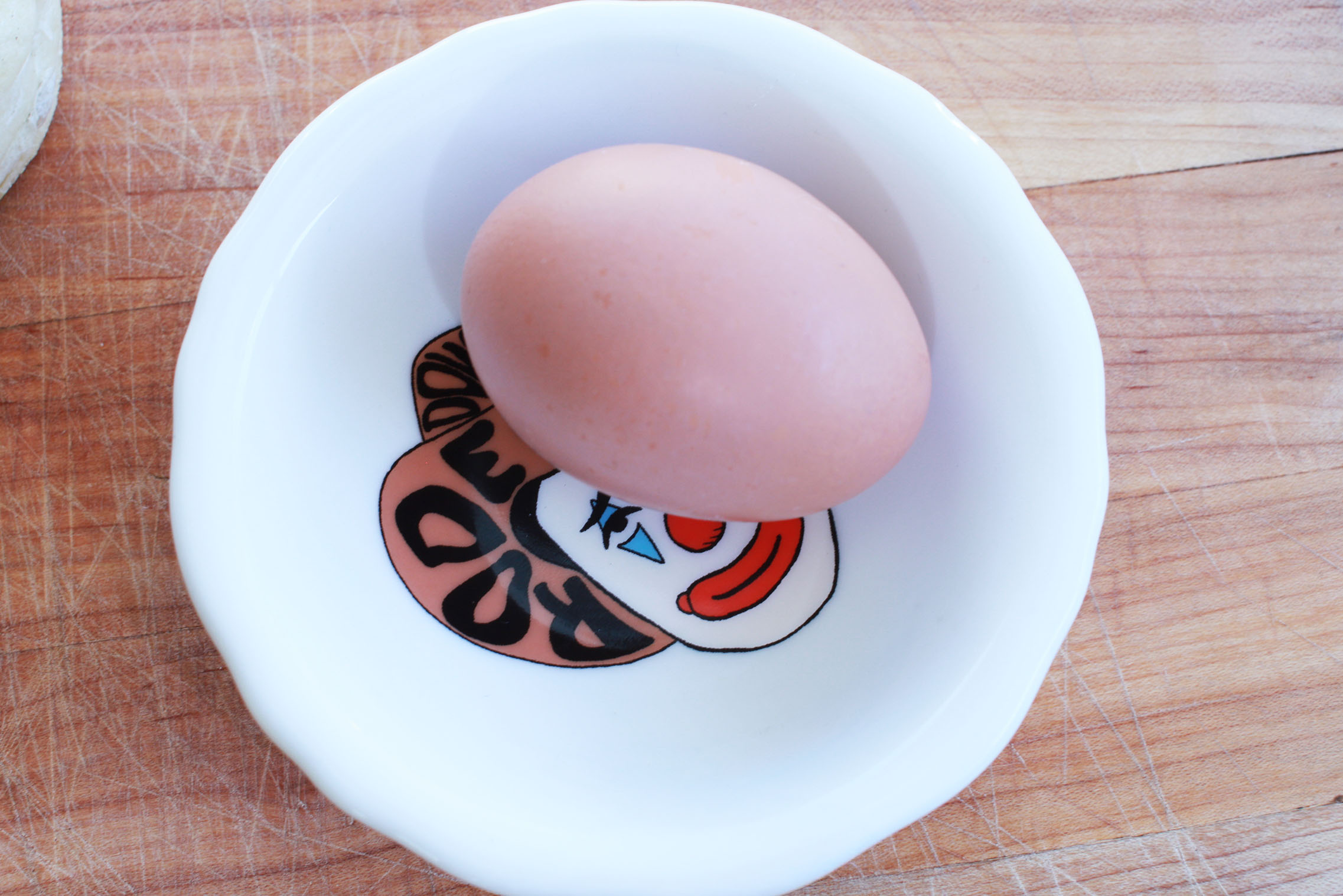
1 XL egg
2 tbsp chives, sliced thin
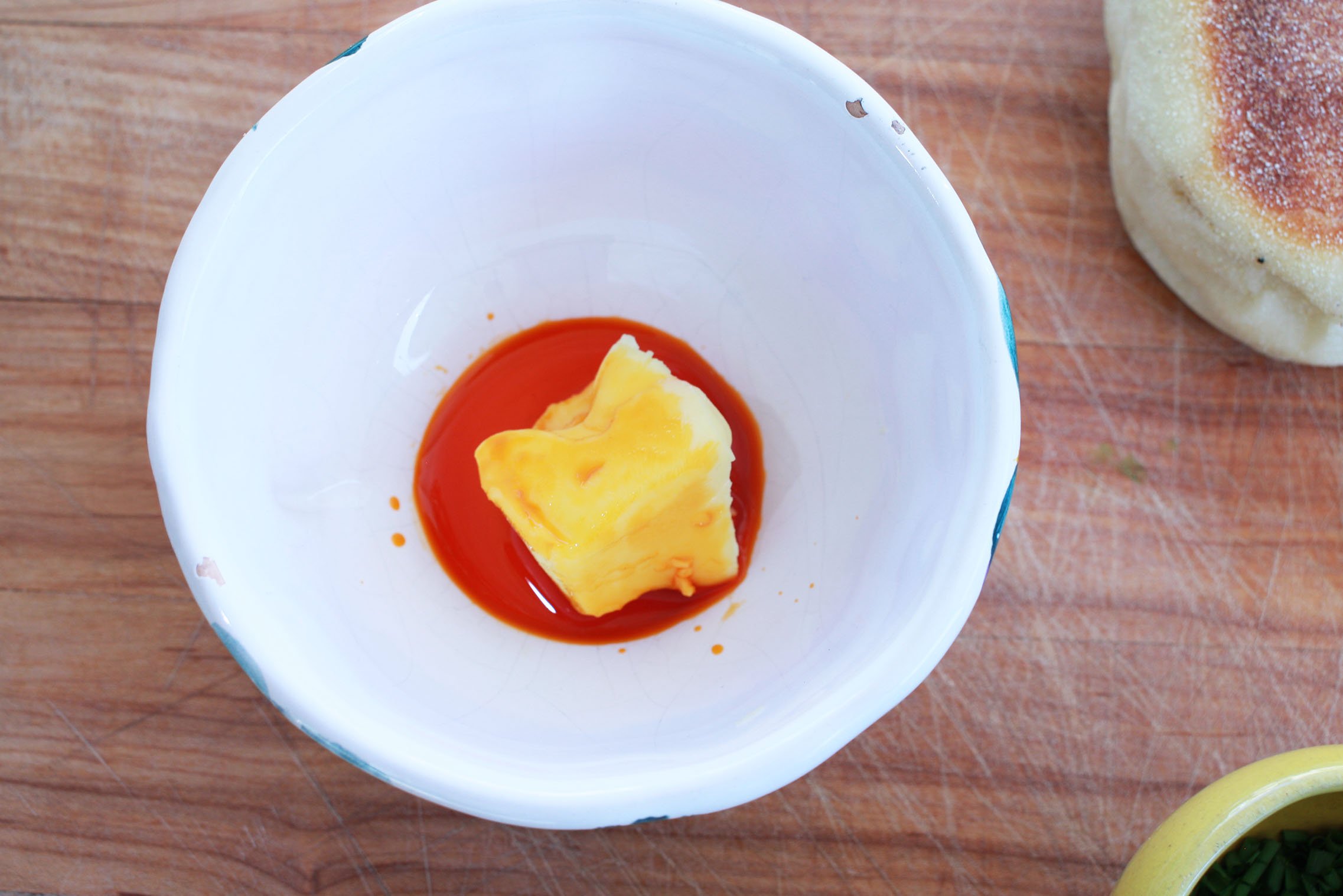
1 tbsp unsalted butter
Salt to taste
1 slice American Cheese
2 droppers of Hero Dose Chimayó Heirloom Chile Oil
English muffin, soft sandwich bread, Martin’s potato roll, or King’s Hawaiian
Toast English muffin or bread. Sprinkle with chives.
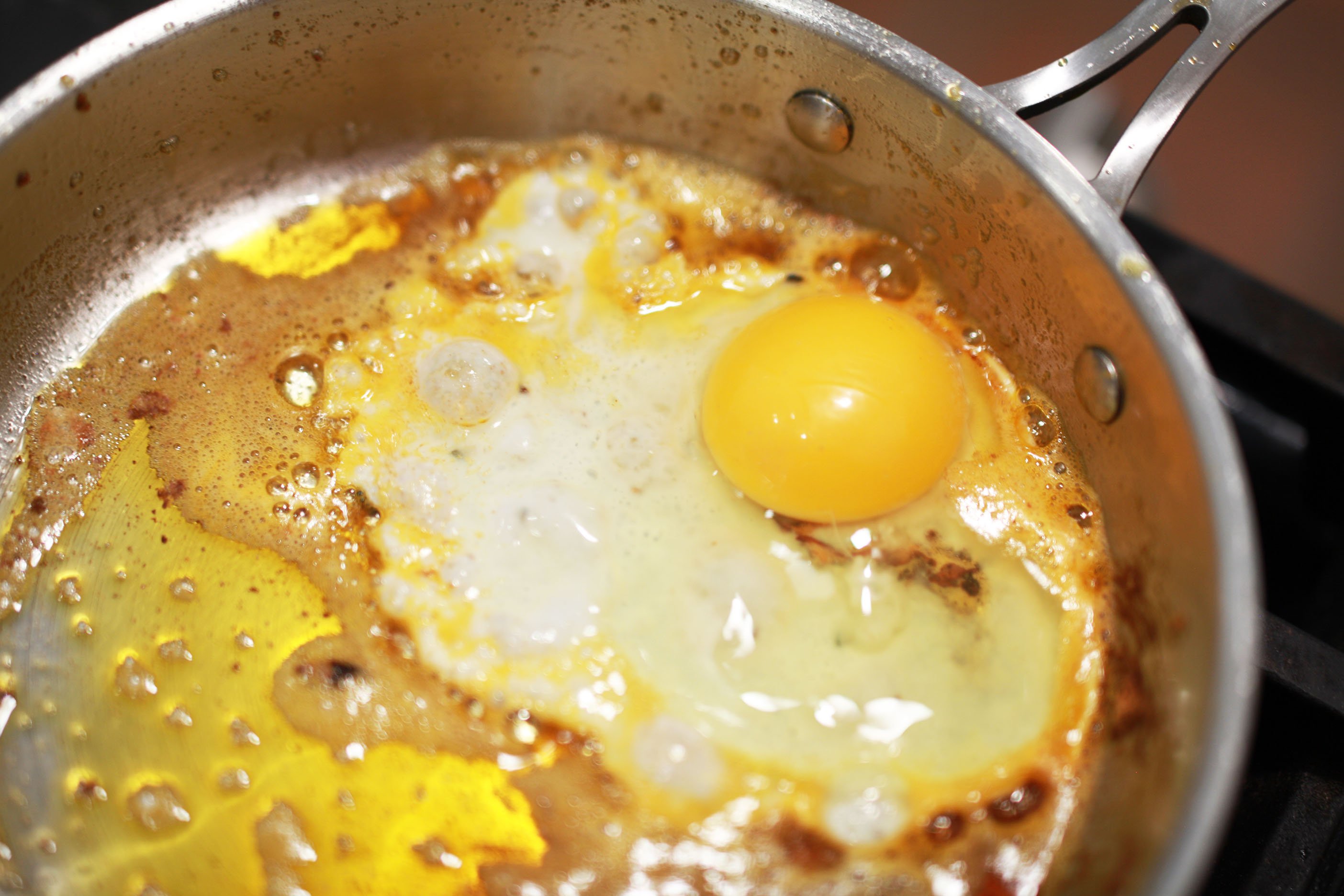
Heat frying pan, add butter and two droppers full of Hero Dose Chimayó Heirloom Chile Oil.
Crack egg into pan, being careful not to break yolk, and salt liberally.
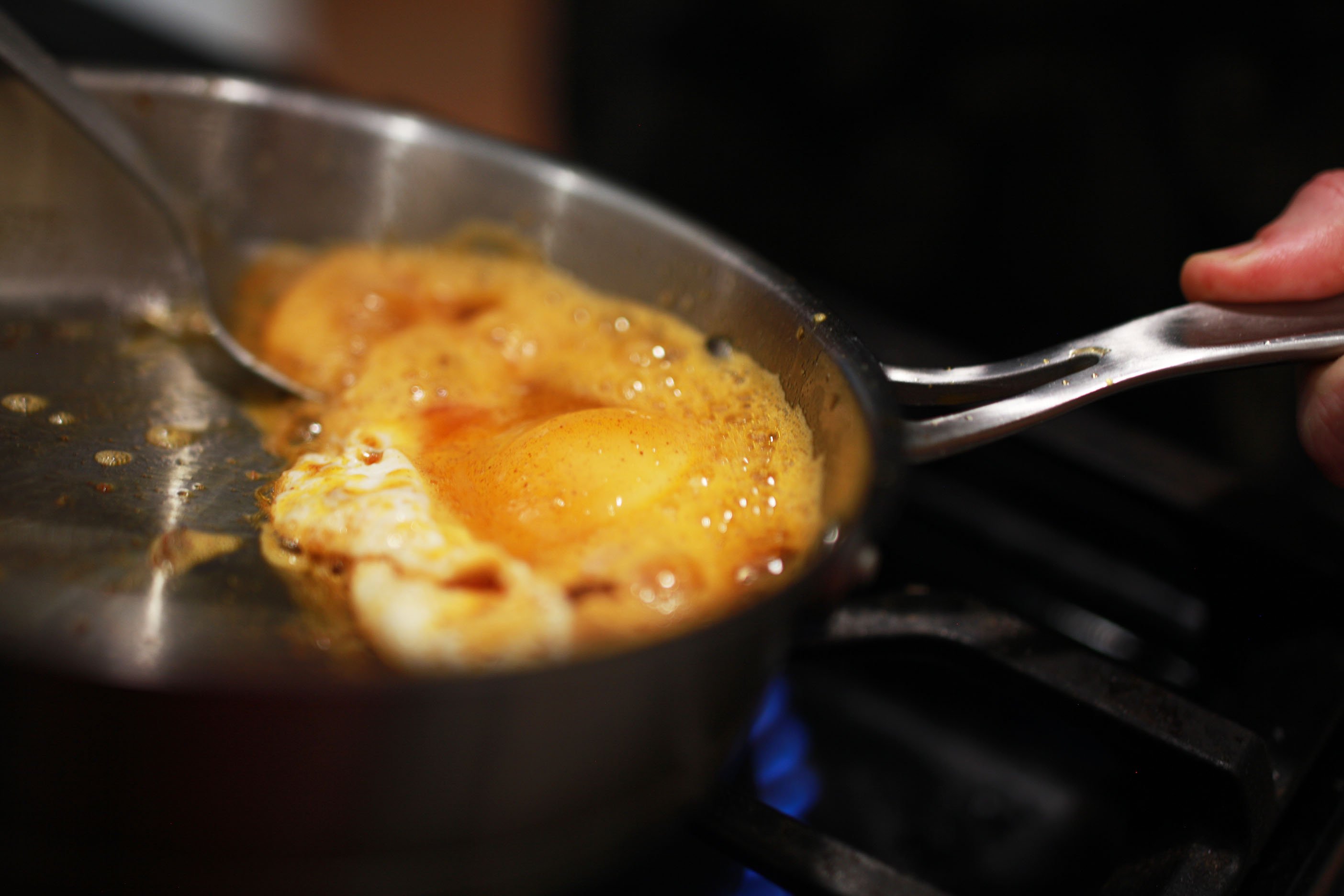
Fry on medium high, drawing the spreading edges of the white closer to the yolk with a spoon or spatula.
Tilt pan and use a spoon to baste the top of the egg with the butter/Chile oil mixture.
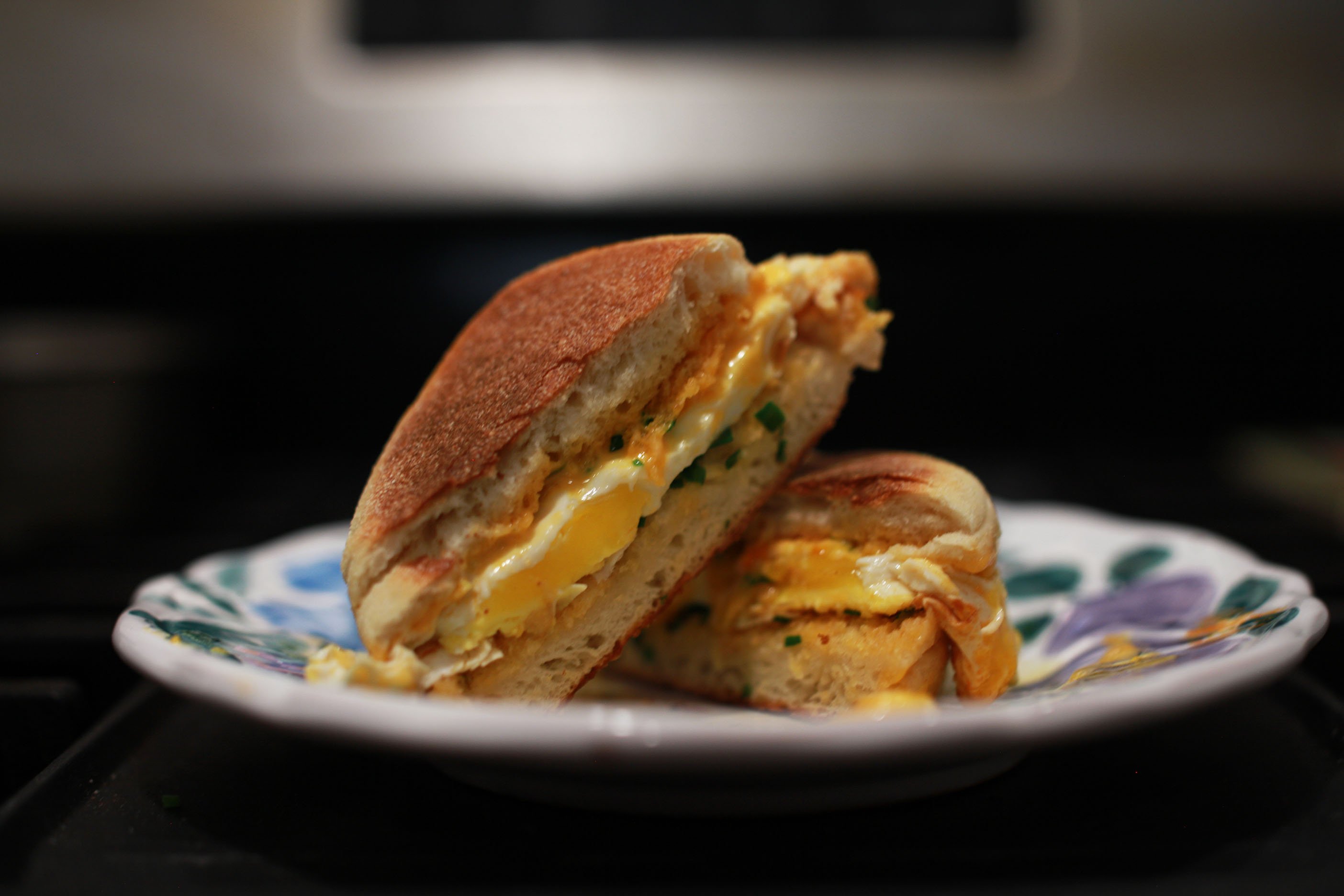
Once desired doneness is achieved (for this one we like a fudgy, “oozing” yolk rather than one that is truly “runny”), top with american cheese, which will melt slightly from the residual heat. Remove cheesed egg from pan and place gently on bread, like you’re putting a very old, fat chihuahua down in a little dog bed.
Form sandwich and consume immediately.
Add more chile oil to taste.
Hero Dose Yamitsuki (Addictive!) Cabbage Salad
In the islands of Japan, it’s widely understood that under the right circumstances you can get addicted to just about anything — including cabbage salad. Yamitsuki means addictive, and this simple preparation earns the name.
Hero Dose swaps traditional sesame oil for Chimayó Heirloom Chile Oil, pushing things into spicy, life-ruining obsession territory.
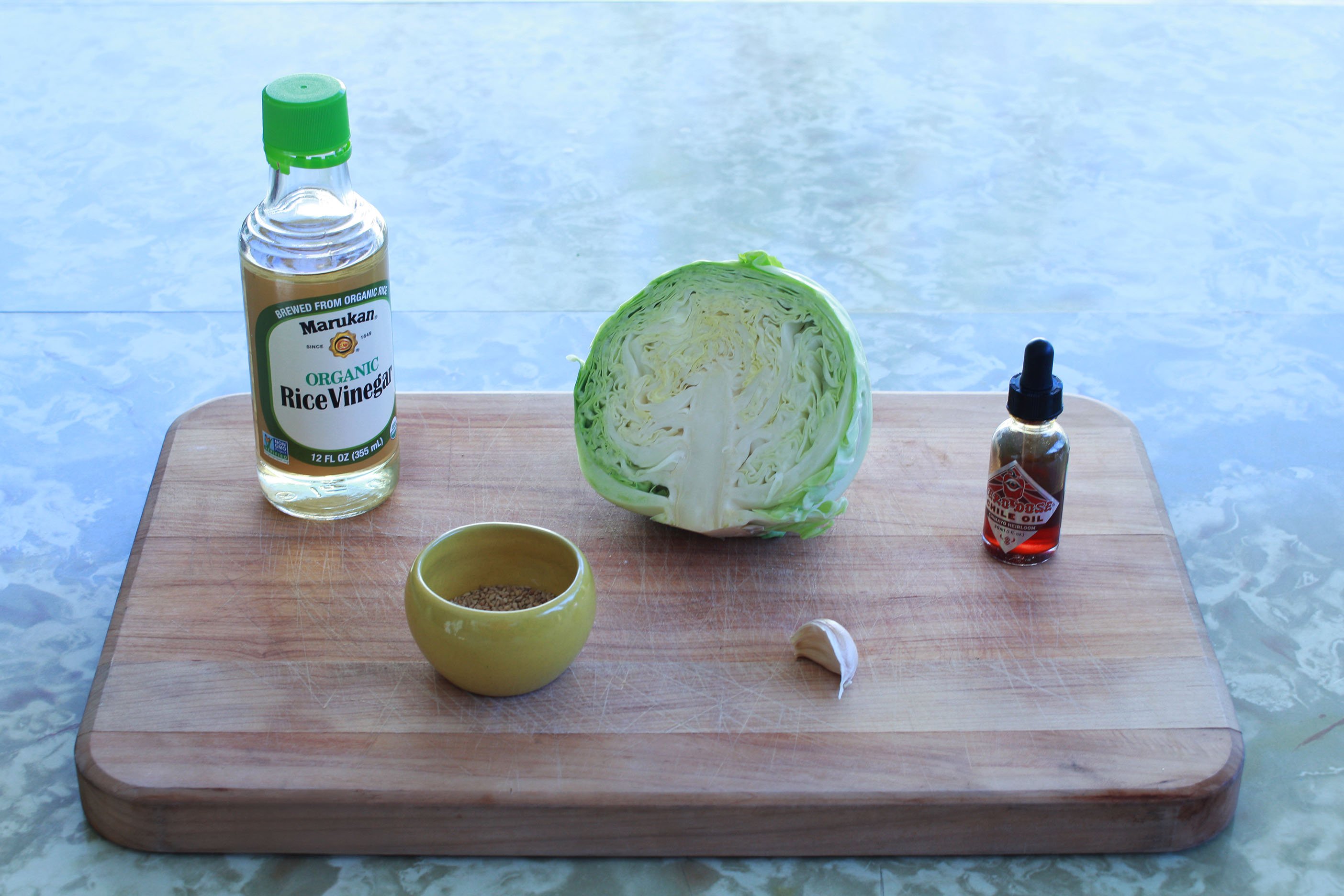
Ingredients
½ head green cabbage
1 tbsp Hero Dose Chimayó Heirloom Chile Oil
1 tsp rice vinegar
1 clove garlic
1 tbsp sesame seeds
Salt
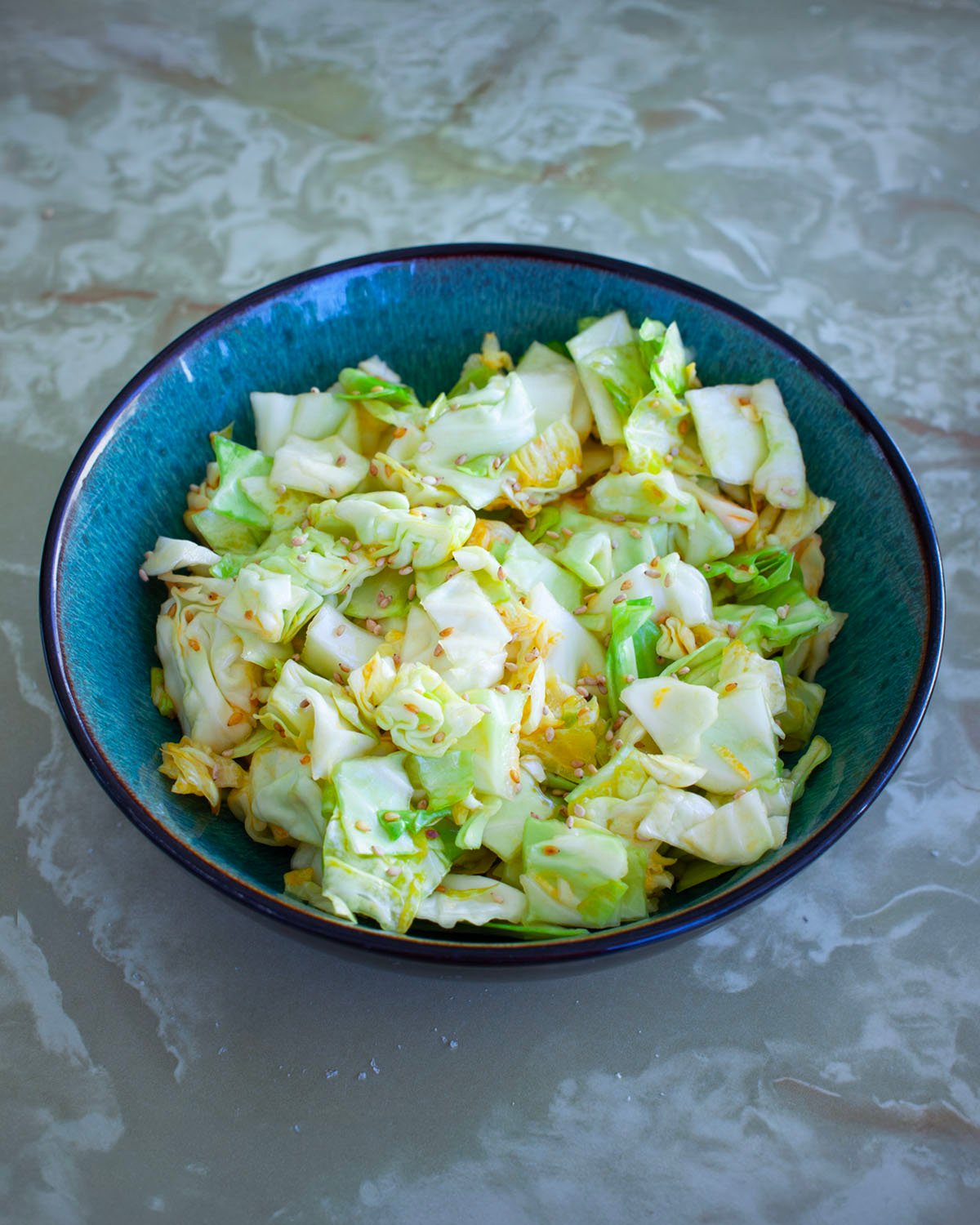
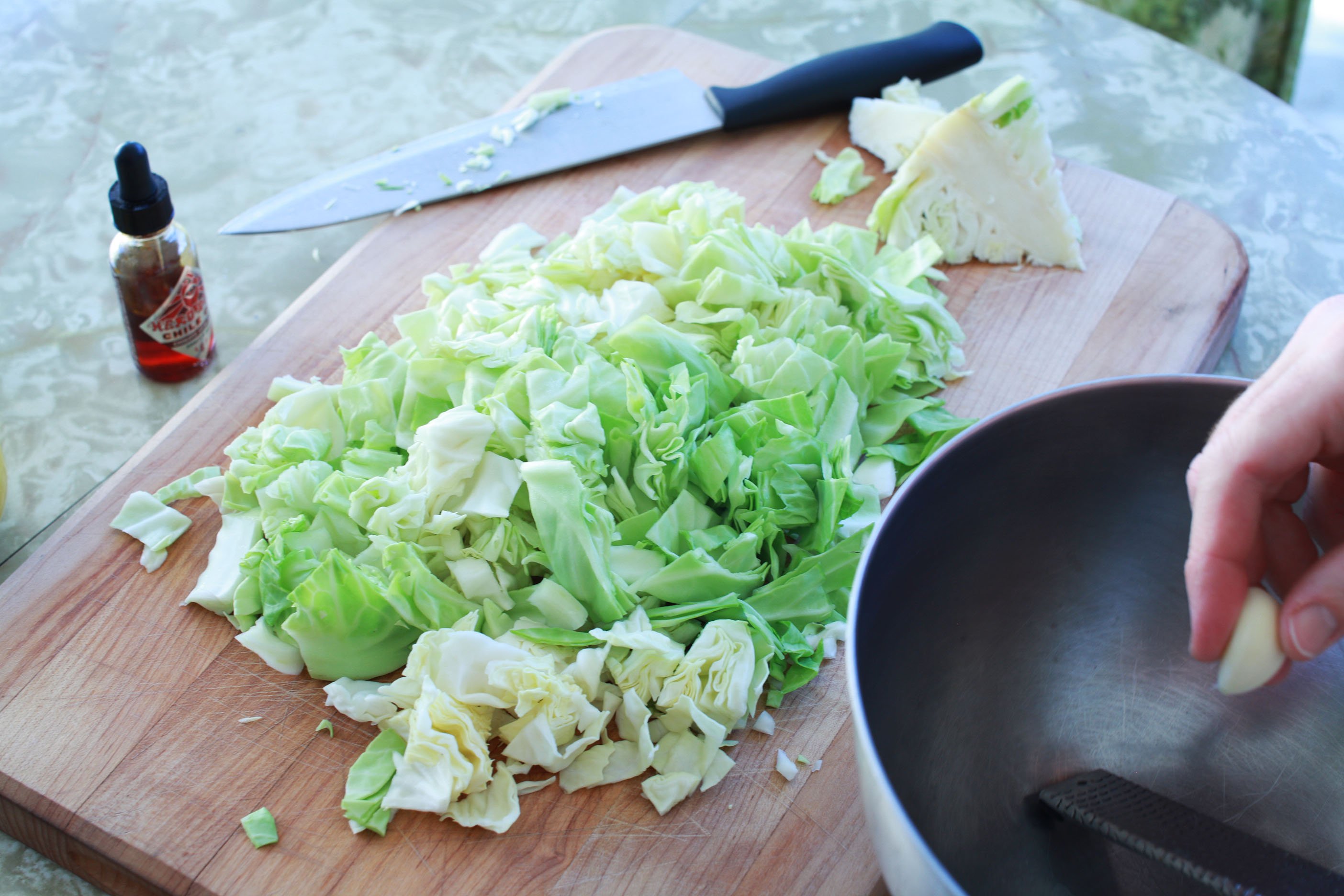
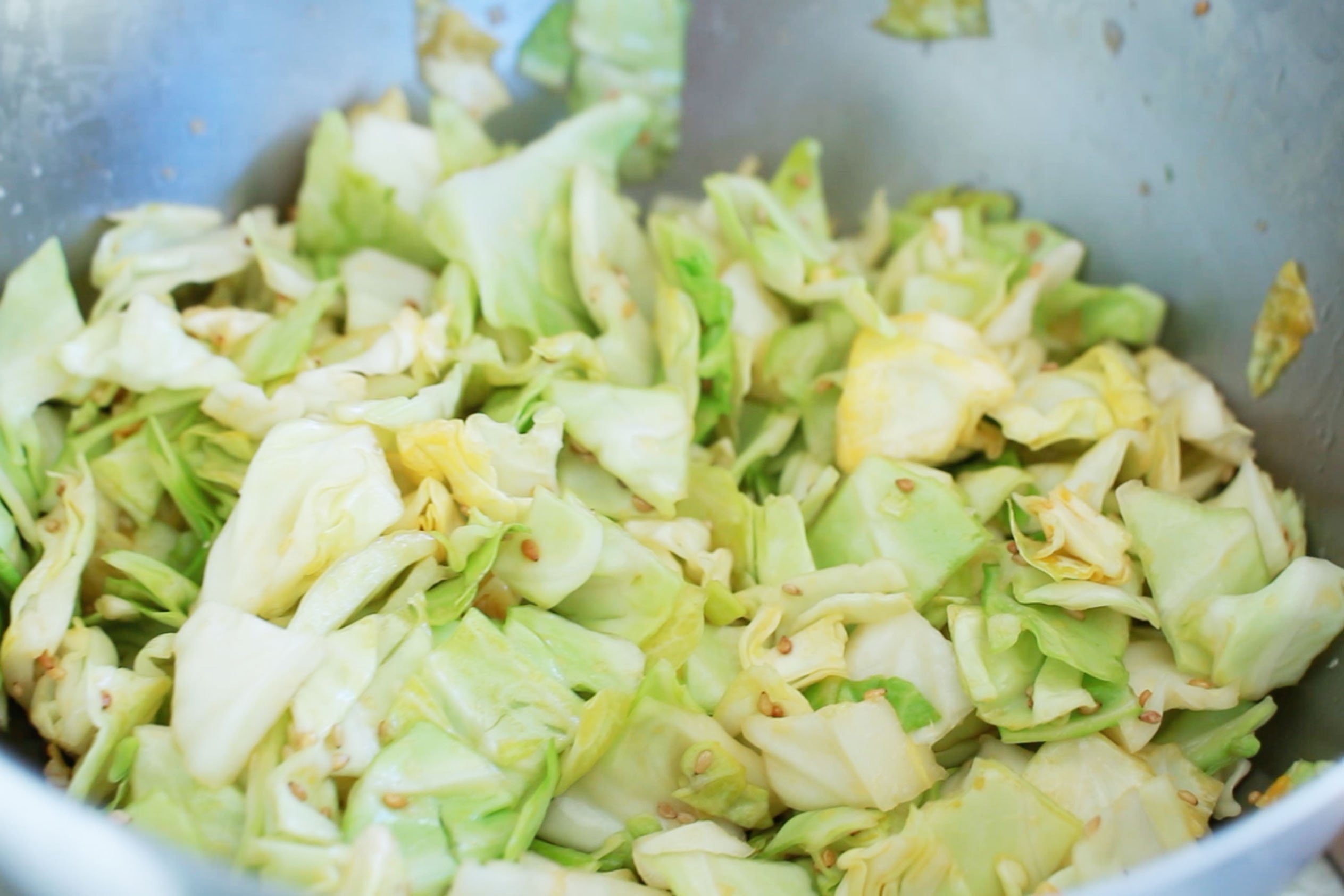
Whisk oil, vinegar, salt, and microplaned garlic. Chop cabbage into rough squares and toss with dressing and sesame seeds.
Optional: lightly toast sesame seeds before adding.
Gets better after 20 minutes.
Still great after a night in the fridge.
THANK YOU FOR READING
Hero Dose wishes you a happy 2026 year of the horse. No gods no emperors no tractors.
Subscribe to The Blotter!
Get exclusive free updates, stories and recipes on our monthly newsletter.
Follow us on instagram @herodosechileco for more!