
presents
THE BLOTTER
an heirloom chile newsletter

Summer 2026
Dear Dosers,
Wow. Has it really been 250 years of Hero Dose? We can't believe it. How can we even begin to untangle the many tethered tales on the chile trail that have brought us to this moment?
There's been ups, there's been downs, wrong turns in Albuquerque and full stops in Santa Fe. In this issue — A wedding in the mountains. A restaurant that shouldn't exist. A thrift store in Albuquerque that absolutely should.
The National Garden Bureau has declared 2026 the Year of the Hot Pepper. We accept this honor on behalf of chiles everywhere.
Summer is here. Los Angeles is burning down its food warehouses. But somehow, against all odds, the chile supply remains — and after two years of drought, the Southwest is facing a bumper crop.
The chiles are doing just fine. Better than fine.
Hero Dose Chile Oil now comes in 2oz bottles for $20. The 1oz bottles drop to $10/ea storewide.
And, for one BRIEF and foolish moment —
The Original Southwest 4-Pack, all four bottles, for $30.




Follow us on instagram @herodosechileco for more!

If you failed to solve last month’s Blotter Riddle…
The answer was: FOOL’S GOLD.
The same glinting thing that caught our eye in that Albuquerque consignment shop — worthless to the market, priceless on the dashboard of your sports sedan.
Fires of Divine Love
On May 30, in the mountains of Piños Altos, NM, just outside Silver City among the wooded piñon groves, wedding bells rang out for René and Amos.
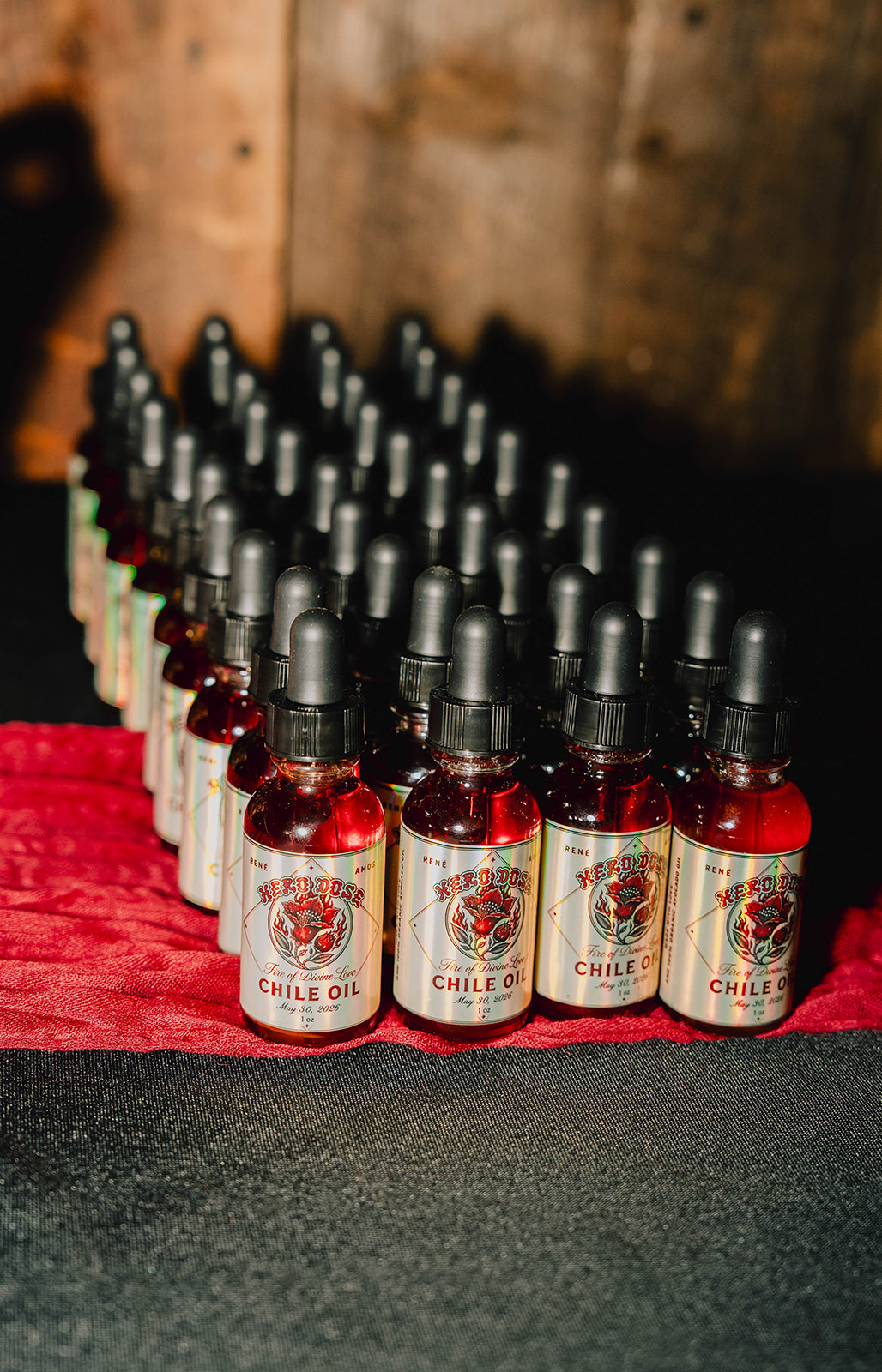
Hero Dose brewed a special limited-edition ceremonial chile oil in their honor for the wedding party: Hero Dose “Fire of Divine Love” Chile Oil
Made with smoked Hatch chile, mountain herbs, pomegranate, and other mysterious forces best left unnamed.
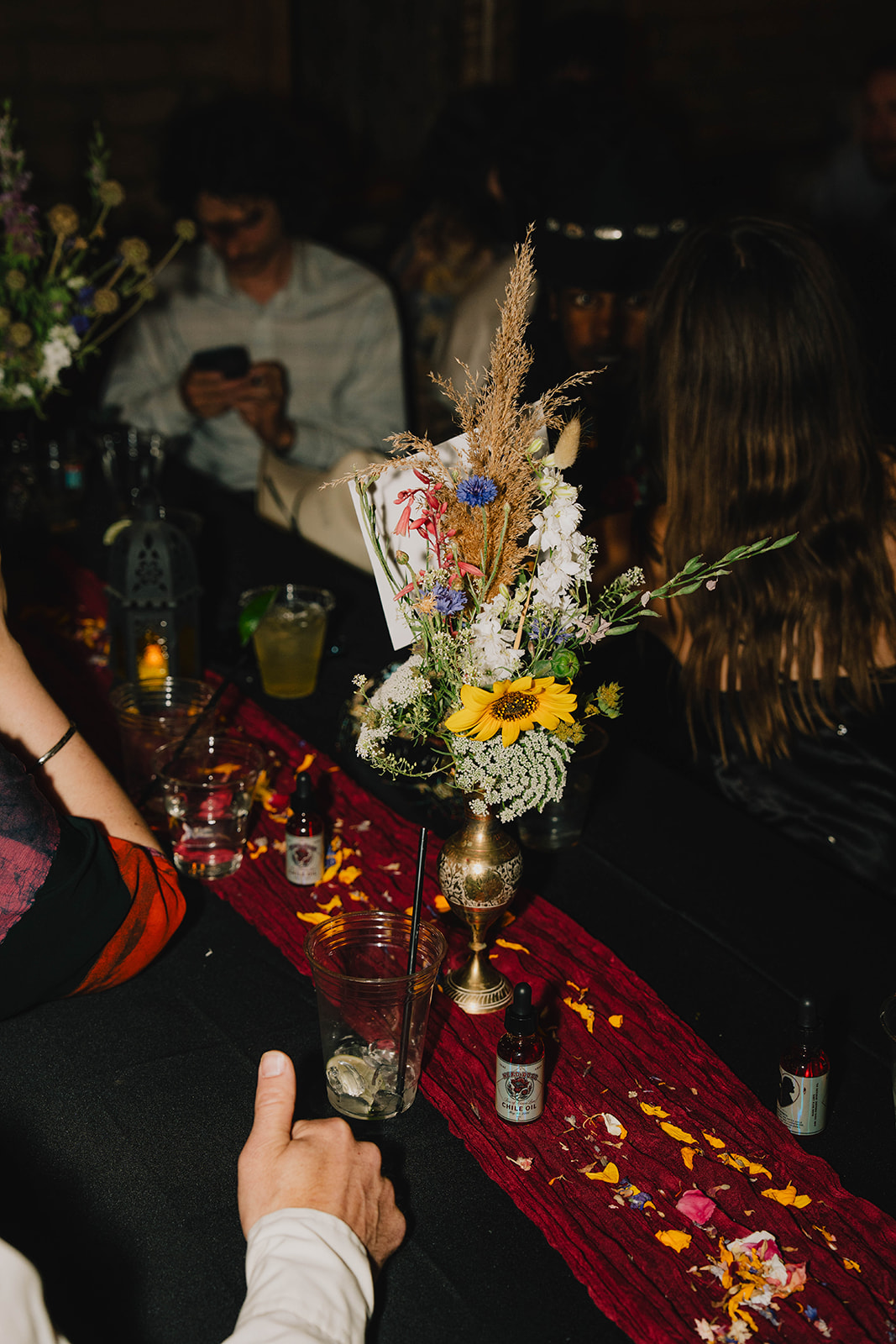
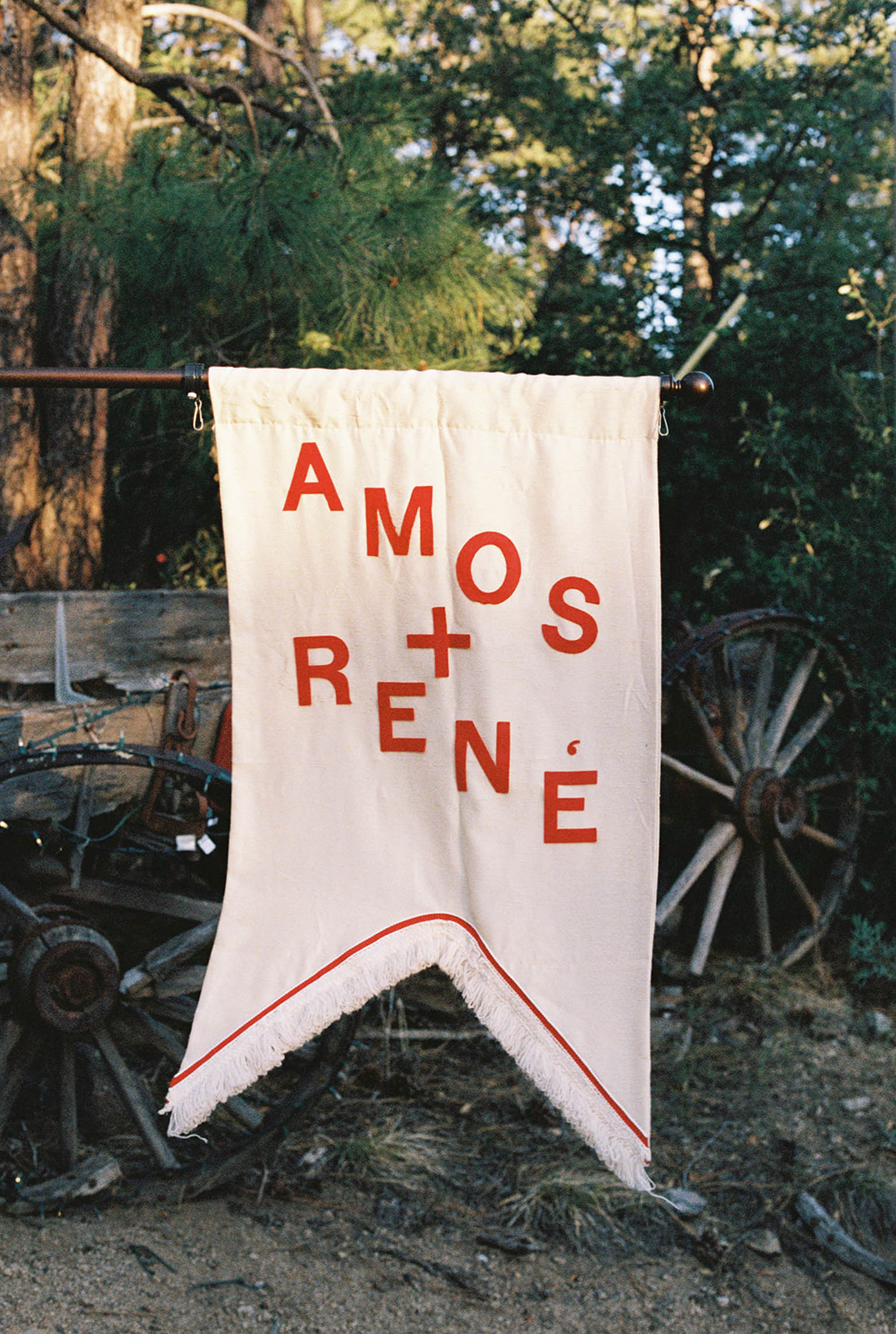
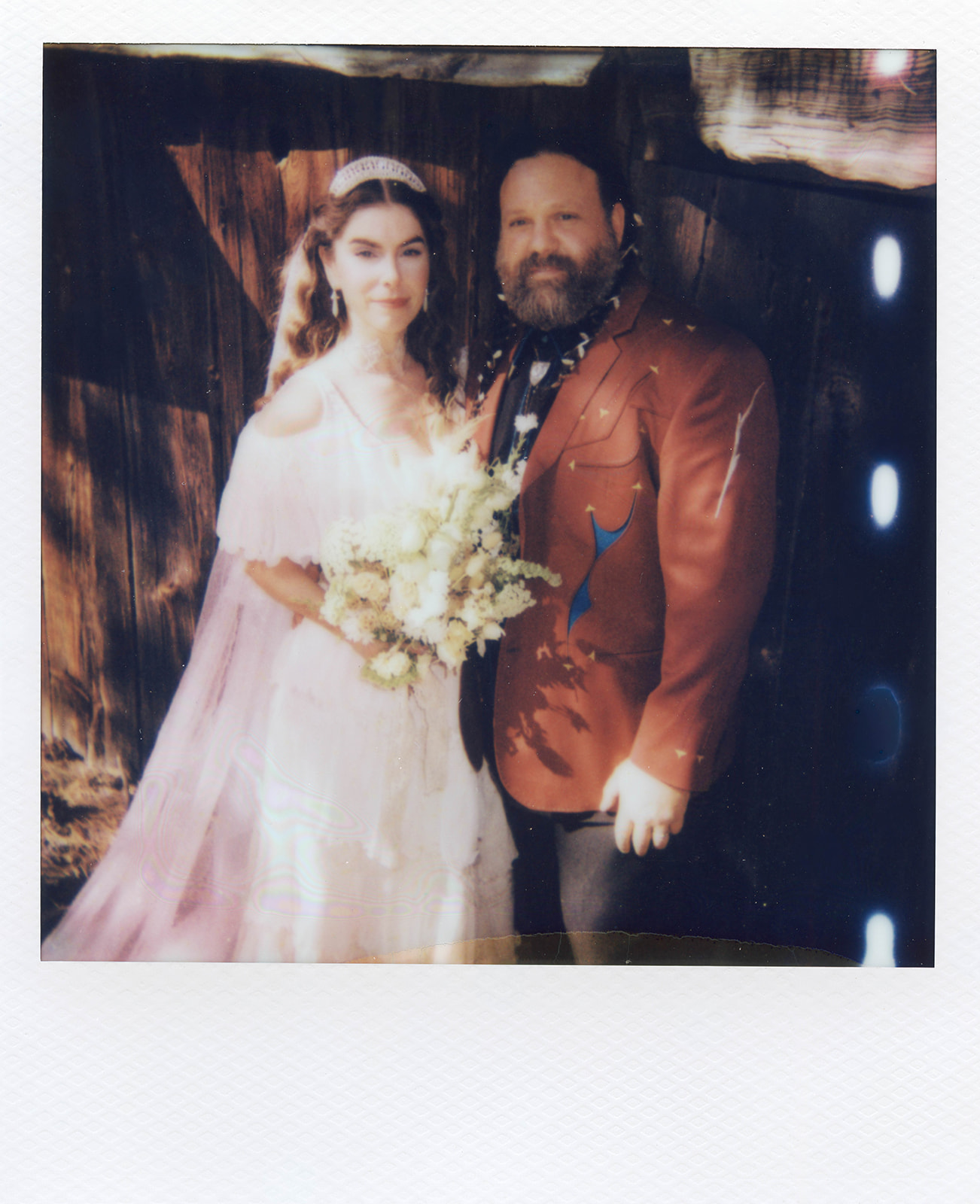
The bride herself — now a Doser for life — reports back on preparations for the wedding.
THE MOON DEMANDS SPICY SERENADES
By René Kladzyk
Sometimes at night, chile peppers talk to the moon. Their blush deepens to a bloody crimson under the silver glow; they take on a different tone than during sassy chats with the sun. Lit by moonglow, chiles don’t have to focus on the hard work of growing and expanding. They can really listen, and sometimes offer up spicy serenades. The chiles commune with the moon about love and mystery, they ponder their role in the grand scheme of things, they listen for the gentle tides inside their sap streams, the moon twirling within them softly.
I learned this two full moons ago, when I was initiated as a proper chilehead by the three wizards who run Hero Dose Chile Company. We were in my backyard, making a ceremonial chile oil for my upcoming wedding to one of those very wizards. The moon was talking to us too.
“Try smoking the chile peppers in the wood of decadent fruits,” it entreated.
We did.
It nudged us to use the most poetically erotic base oil we could find.
“Pomegranate oil?”
“Why yes,” the moon answered.
Our bodies’ tides waxed and waned, our pulsing blood deepened to match the cherry-smoked chile oil, our hands glowed silver as we swirled the concoction. We prayed and we feasted. And then we gave the chile oil what it asked: one moon cycle of quiet contemplation to prepare for a wedding celebration.
On the second full moon of May, the chiles were ready. The moon was ready. We were ready. We got married in a tiny town in southern New Mexico, and as we prepared to feast, we prayed and introduced our guests to our good friend: the fire of divine love chile oil.
I can’t believe how delicious it all was. Thinking of it, I can hear the spicy serenade of the chile oil to my belly, the spicy serenade of my dancing bloodflow to the moon, the spicy serenade of the moon back to us. In the early hours of the next morning, out the window of my cabin, I heard black bears having sex. I know what the moon was saying to them.
“Try rolling around in that brush there,” the moon purred.
“Right here?” the bears asked. “Should we roar loudly, you think?”
“Yessss, make sure my other friends can hear you,” the moon answered.
★ ★ ★
The National Garden Bureau has declared 2026 the "Year of the Hot Pepper."
It's about time.
The one pepper that deserves the most credit is the one that started everything.
CHILTEPÍN!
Old Fire of the Sonoran Desert
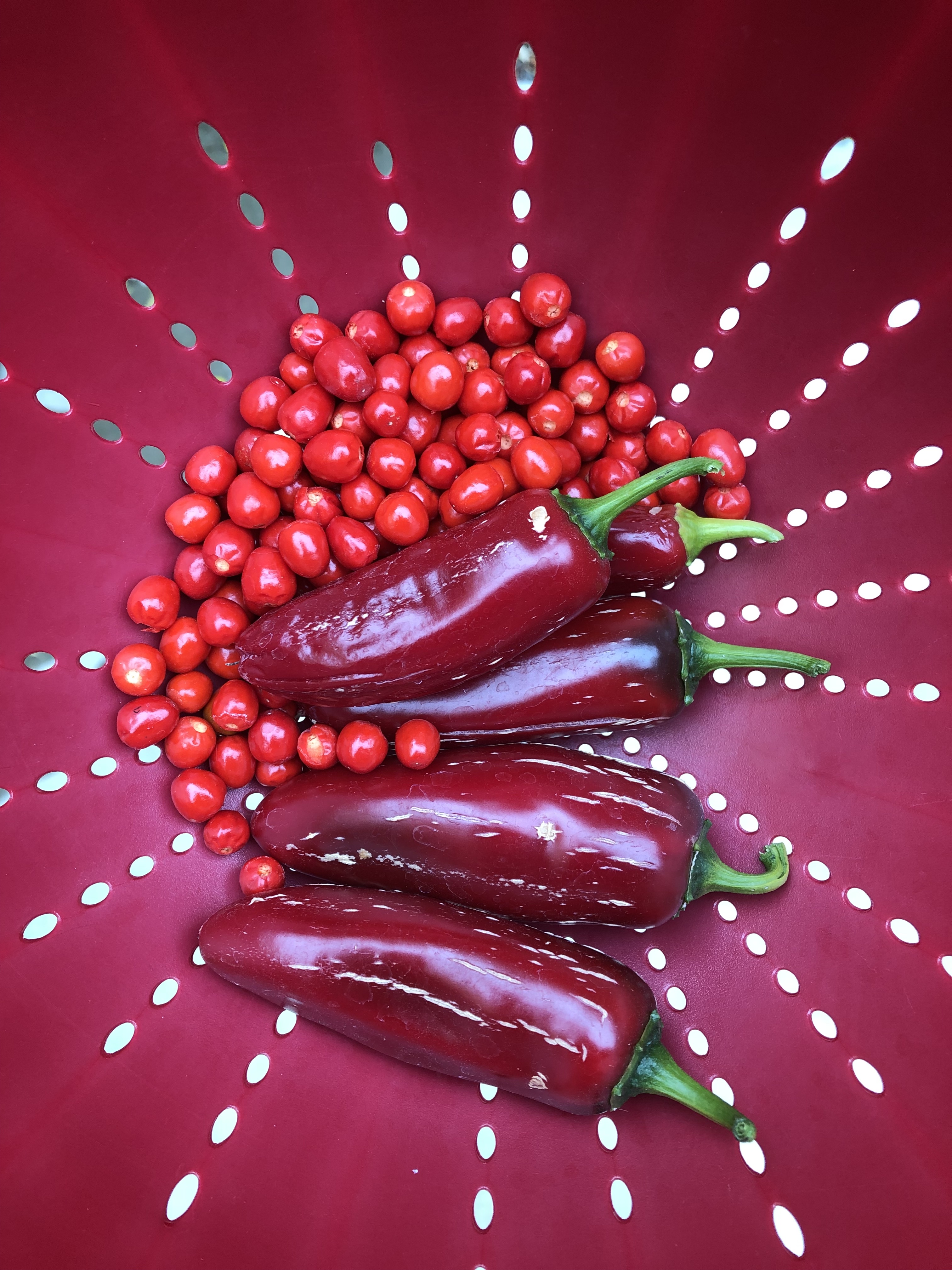
When you see it sprouting in the wild, its berries protruding upwards toward the skies, exploding with a fiery orange-red, it beckons to birds to be plucked and carried across geographic divides. Birds are immune to capsaicin and have been cheerfully carrying chiltepín seeds across deserts and mountains for thousands of years, unwittingly embarking on a journey to spread the project of chile cultivation across the North American continent.
Chiltepin is the wild progenitor of many domesticated chiles in the Capsicum annuum species. It's The Mother of All Peppers, if you want to get formal about it, and the chiltepín does not want to get formal about anything. It grows wild from the U.S. Southwest through Mexico and Central America, with deep roots in Sonora and northern Mexico today.
Wild chiles have been used intensively by people for thousands of years, which makes the chiltepín feel less like an ingredient than an inheritance. The fruit ripens tiny, bright, and almost stupidly hot — around 75,000 Scoville units, roughly fourteen times hotter than a jalapeño — a little red alarm bell ringing from the shade of desert brush. It delivers its heat in a fast, clean burst that fades just as quickly. Aggressive but not vindictive.
Texas named it their official state native pepper. We feel this is the least they could do. The Herb Society of America named it their Herb of the Month for April 2026! It is also protected in certain national parks across the Southwest — various governmental and horticultural bodies have spent considerable energy giving awards and protections to a plant that has been doing exactly what it wants, exactly where it wants, since long before any american government body ever existed.
When chiltepín pods burst up from the brush in full ripeness they are ready for picking, and come off with a light tug or twist. When dried, these chiles take on the flavor that marks their true nature: a sweet, fruity, and spicy desert berry.
The proto-pepper. The old fire still burning hot on the desert sands.
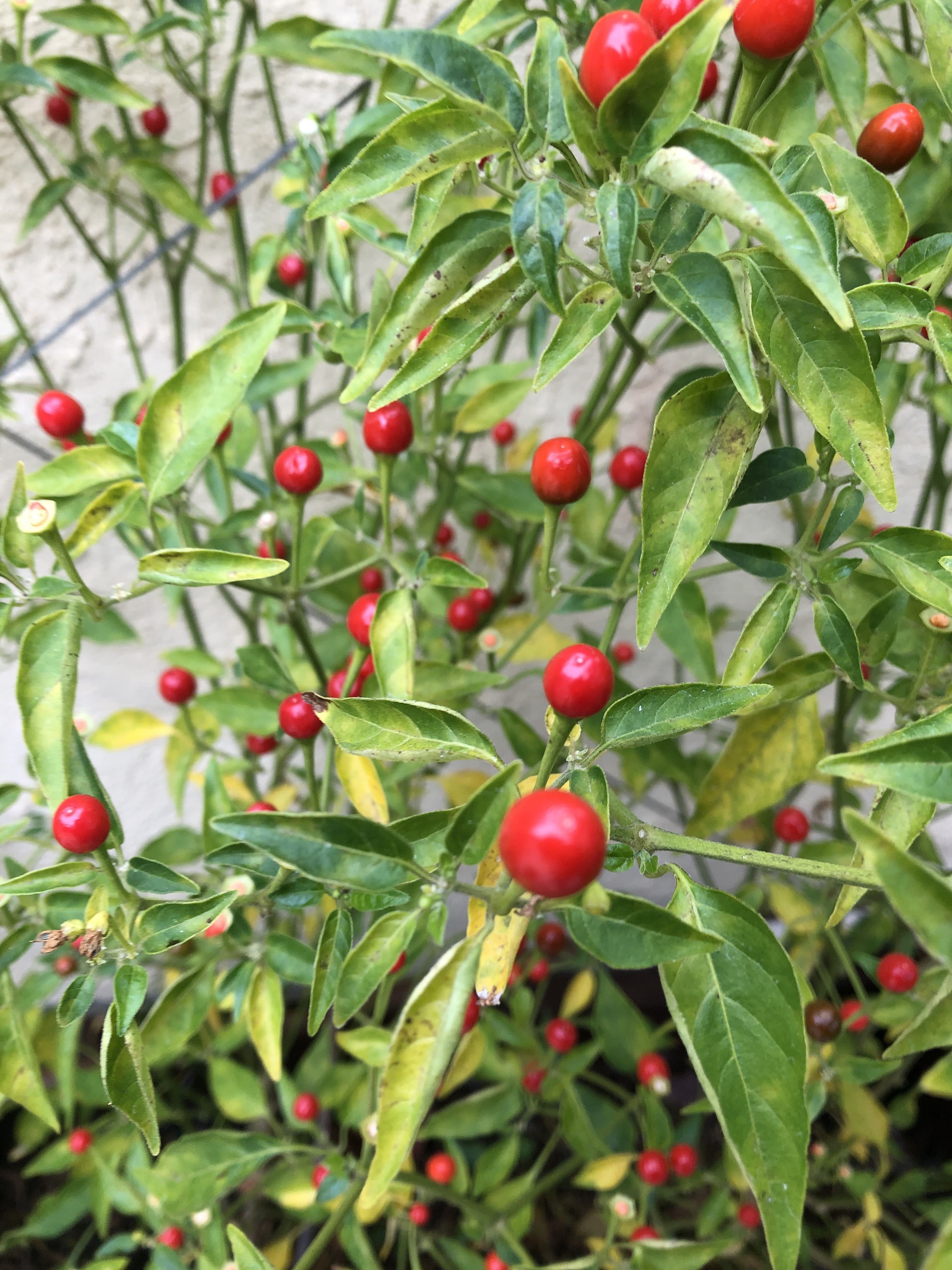
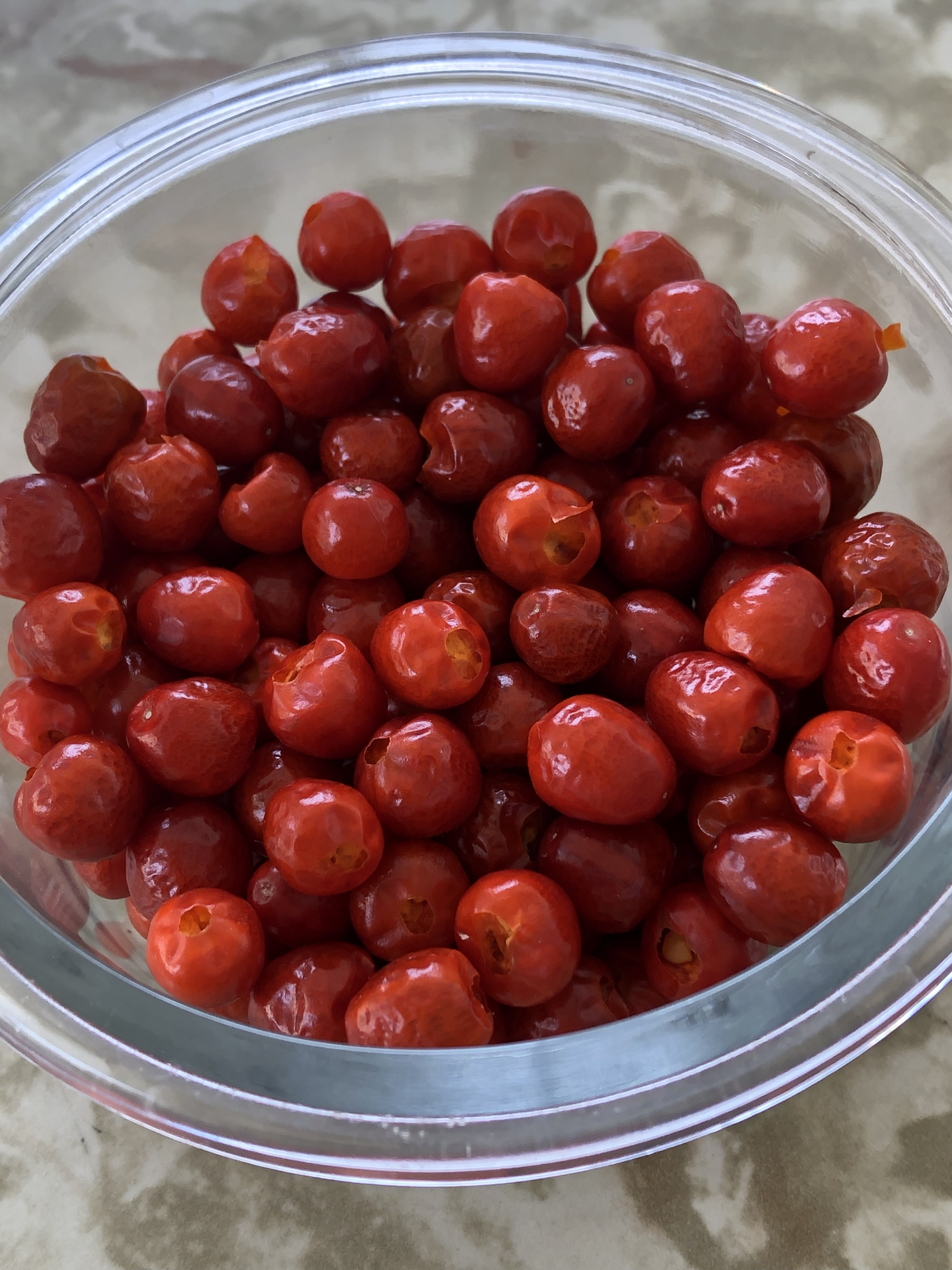

Hero Dose Chile Oil is now available in 2oz bottles for $20 — because one ounce was never really enough, was it.
Get more of your favorites.
SUMMER SAVINGS
Thru July!
1oz bottles are now $10/ea.
And, for one brief and foolish moment — the full Southwest 4-Pack, all four bottles, for $30.
FIELD NOTES
In Search of the True North Chile
I had spent a couple of years prior and the pandemic altogether in New Mexico, Albuquerque to be exact, but had recently come home to Los Angeles. I was drawn back now by a sudden rush of nostalgia and a powerful desire to experience the majesty of New Mexico Chile, which I had glimpsed a few times during my years in the motherland but still felt distant and mostly unknown. Whispered rumors, dark intimations, and half-remembered excuses swirled in my memory. I knew that there were levels to this Chile game that I was not even remotely familiar with, which had everything to do with the heirloom varietals that originated in the tiny villages of Northern New Mexico.
I also needed to see what I had missed at my favorite thrift and consignment stores so badly I could feel it in my bones. It was the dead of winter and I needed to be in the land of enchantment, not on the 405; I needed snow, and I needed a bowl of red chile so deep and rich that it would alter my DNA even more than the Covid vaccine had. I felt better as soon as my feet hit the brown and turquoise carpet of the Albuquerque Sunport. The plan was to spend the night here and head up to Santa Fe the next day.
The first order of business was a late dinner at Frontier, not the highest expression of New Mexican food but unquestionably classic, especially for the pillowy, deeply comforting flour tortillas that shoot relentlessly out of a little conveyor belt machine whenever the restaurant is open, the kind of contraption Bugs Bunny would trick Daffy Duck into swan-diving through, producing a flattened Daffy-tortilla that would slowly strain his beak straight after landing on Bugs’ plate. I strutted up dreaming of those tortillas and my first taste of New Mexico chile since leaving, served with plenty of gooey orange cheese, and nearly walked into the glass front door. I had forgotten Frontier now closed at 10 p.m., not the pre-COVID 11 p.m. I had grown accustomed to. An entire hour of the possibility of a decent meal on Central Avenue: another victim of the novel coronavirus and the scientists who created it. I was left with no option but Taco Bell, which I ate in the parking lot of my rental car to avoid contaminating my hotel room with its smell and dread. It sucked. Morir más.
But the morning brought new possibilities, chief among them getting the fuck out of Albuquerque and aliting north for Sante Fe, my True Destination. I sensed in my bones that the mysteries of the Chile would only reveal themselves to me in the lands of the north. But first I needed to swing by Savers. I could not keep myself away from a City Target-sized thrift store, well maintained, clean, organized, and chock full of the occasionally miraculous detritus generated by the lives of the people of Albuquerque. It was every bit as wonderful as I hoped and I left with a pair of Made in USA 501s and a Polo Oxford Cloth Button Down shirt in jaunty yellow and powder blue university stripes.
On the way out of town I made another stop, at a consignment store specializing in outdoor gear owned and managed by a very nice but slightly off-putting, rangy older gentleman who insists on giving every single visitor a tour of the entire crazily messy shop every time they visit. It has a quality shared by many New Mexico businesses (shops, restaurants, hotels, even gas stations), and I say this with great affection, of being run by people who have never actually been to such a place but somehow became aware of them, maybe by an explanation given by a seatmate on a long Greyhound ride, and thereafter become fiercely determined to make a go of it. Unusually for New Mexico, this owner's idiosyncratic and patently irrational business practices had worked right on out, seemingly beyond his wildest reckoning. In the few years I'd been his customer he had moved locations twice, each time expanding to a larger chaotically full warehouse in a different desolate Albuquerque industrial park.
This strange man's insistent, long-winded, totally irrelevant tour, which I had heard verbatim at least three times before, nevertheless stoked within me a violent lust for synthetic waterproof fibers mechanically woven before the turn of the millennium. I left with a mint condition mid-90s Aztec Blue North Face Steep Tech jacket sized 2XL that I have never worn since. My only regret is not buying more.
I drove the road to Santa Fe against an orange sherbert sunset, flecked with dazzling flourishes of white golden light reflected on scattershot clouds. After checking into a room with centenarian wood floors at the Hotel Saint Francis, I made my way to dinner at a traditional New Mexican place in the oldest part of the Old City, even more legendary than Frontier, and with a better reputation for great food. I had enjoyed several first class brunches there on their lovely patio, sipping a prickly pear marg and getting as full as I've ever been from massive plates of blue corn tamales smothered in ladles of a red chile I remembered as quite dank. This evening I was inside, under unfortunate lighting, and somehow the low ceiling and dingy yellow walls brought forth the more pedestrian aspects of the red chile on my plate. It was revealed to be merely fine, adequate, at best a fair approximation of some far greater, more powerful ideal. Rats! I had the jeans and the jacket, sure, but the True Object of my Quest continued to elude me.

That night, unsatisfied but wobbly from the margs and a few too many sopapillas, I walked past the entrance to a used bookstore, improbably open at this late hour, and didn't hesitate to wobble right in. There are few pleasures in this world greater than browsing in a used bookstore after nightfall, and the inadequacies of my earlier meal faded as I spent a happy hour going back and forth through the little warren of shelves.
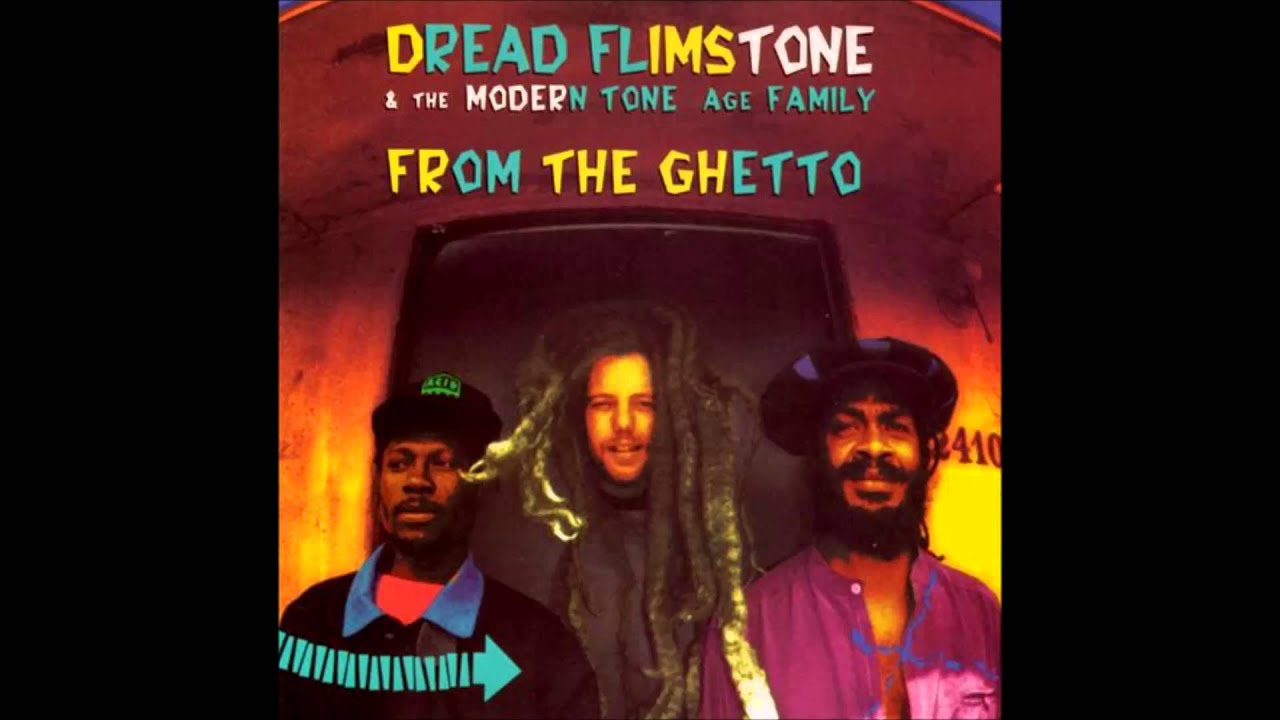
I made two purchases. A Near Mint+ first edition 1991 copy of Acid Jazz: Collection One on compact disc, and a glossy 90s perfect bound coffee table book about New Mexico Chile. I promptly lost both of them beneath the ever growing heap of vintage clothing I spent the next day acquiring, more or less forgetting about my red chile quest apart from enjoying a wonderful but not life-changing breakfast burrito purchased out of a takeout service window charmingly located around the corner from the front door of Santa Fe treasure Cafe Pasqual's, which was made with green chile anyway. When packing up my haul the next afternoon, before my late check out and trip back down to the Sunport, I rediscovered both the CD and the book. Lacking any means to play a CD, like most people on earth in the year 2022, I immediately pulled up Dread Flimstone & The Modern Tone Age Family - From The Ghetto on YouTube and played it on full volume on my phone, laying among my stuffed baggage, and fell into an Acid Jazz trance, reading every word of the book.
I learned amazing things. The mysteries that were the original impetus for my trip began to unfold themselves before my mind’s eye. The secret doctrine of the legendary New Mexico Chile was revealed to me. The New Mexico Chile most outsiders know, including the famous Hatch Chile, was in fact the product of an early 20th century agronomic research project designed to breed a bigger, heartier, disease resistant Chile to grow in the vast irrigated farms of the southern part of the state. But the original genetic material came from the North, the True Source of New Mexico Chile. Each of the villages of Northern New Mexico in fact had their own landrace Chile varietals, nurtured by many generations to slowly adapt to a specific microclimate. These were the Heirloom Chiles of the North, and were spoken of in hushed tones by Chile aficionados and the authors of coffee table books. Chimayo. Escondido. Nambe. I knew then that my quest must continue into these legendary villages, to see these rare and otherworldly Chiles growing out of the soil that had been their only home for centuries, irrigated if at all by ancient acequias, the flavor of their fruiting bodies so concentrated and profound as to make a Hatch Chile seem the equivalent of a Ralph’s conventional chicken breast, plumped up and picturesque but without flavor or soul.
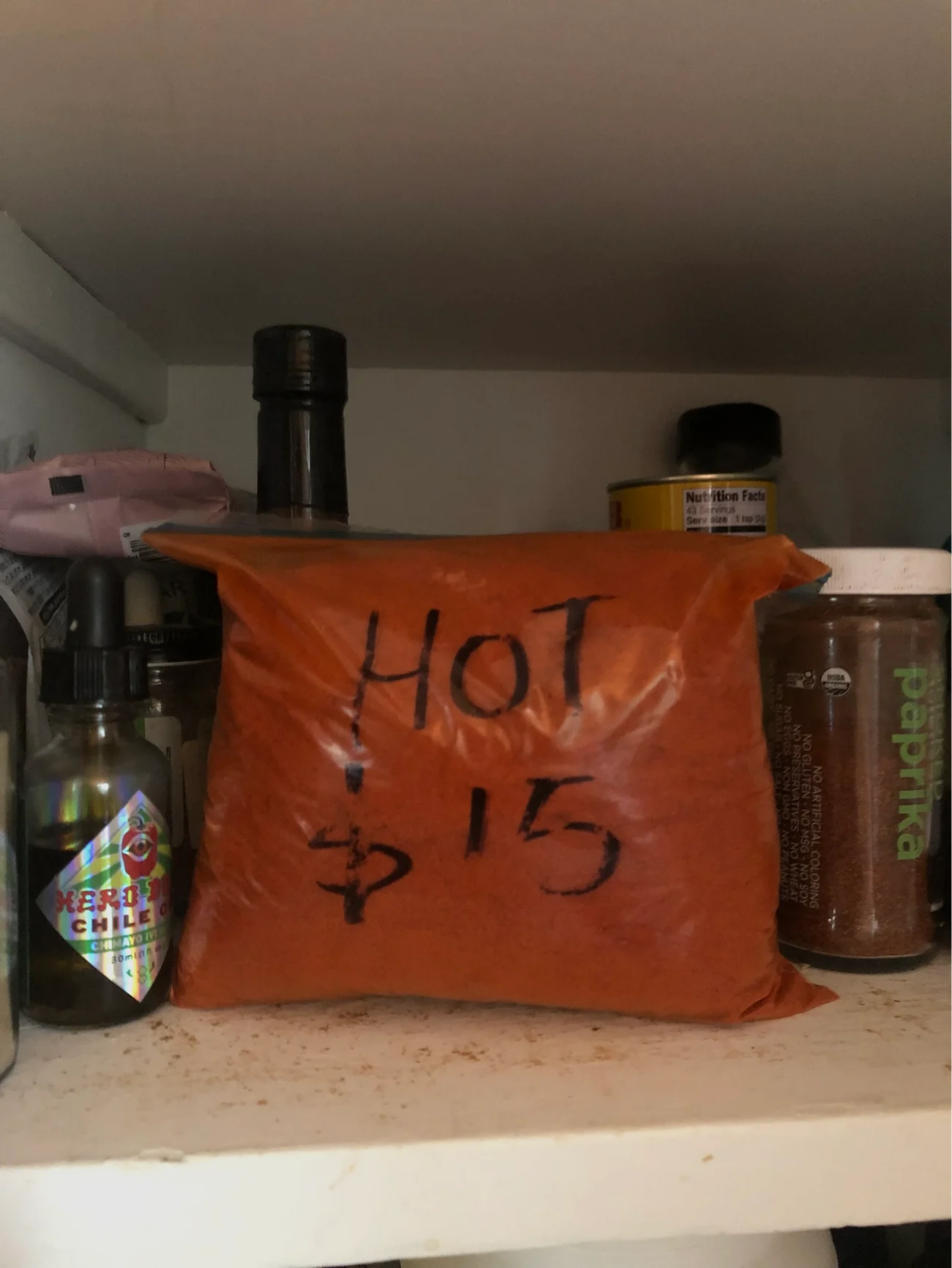
But I had a flight to catch. The True North would have to wait. I furiously googled for any shops in Santa Fe that might carry heirloom Chile powder. A promising shop was directly around the corner from the Saint Francis, but it closed in exactly five minutes. I threw on my Steep Tech and ran. Among the dozens of packaged dried Chile products and powders on offer there was only one for me. “Native Nambe.” I recognized the name of Nambe Pueblo from my book. Two stickers alerted me that the small package was “Extra Hot!” and not safe for consumption unless heated above 140 degrees Fahrenheit. I bought as many as I could fit in my Personal Item.
On the sidewalk outside, in the fading light of a winter’s day, I threw caution to the cold wind and ignored each sticker’s warning, licked my pinky, dipped it into the sparkling, deeply red-orange powder, and brought it to my lips. My life has never been the same.

SHIRUBĒ
424 Wilshire Boulevard, Santa Monica
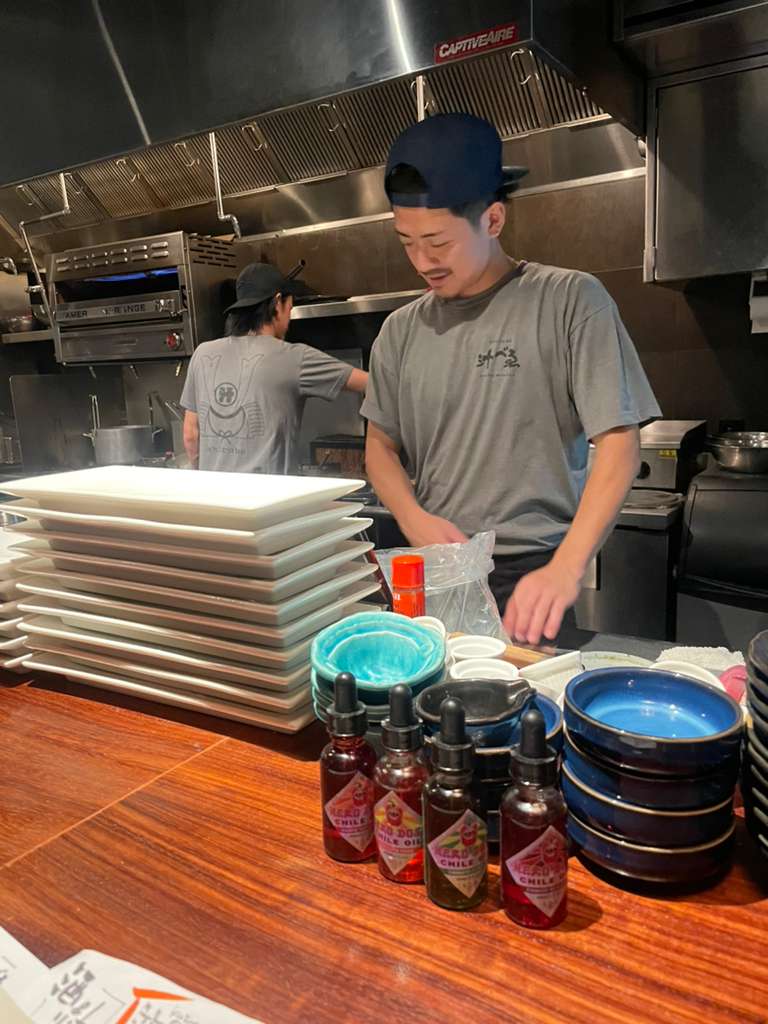
Shirubē is the neighborhood Izakaya Santa Monica has never, ever deserved, a tiny temple of effortlessly warm hospitality and deadly serious cooking improbably perched between the long vacant shell of a former Wahoo's Fish Taco and a Chevron, a couple blocks from the Promenade. They are very good at everything they do, but the sashimi is especially fantastic. Cut in thick slabs appropriate to an izakaya, no meal here should start without it. Between cleanly mineral sea bream, plump discs of hokkaido scallop, and beefy bluefin aged in-house, there are no misses. The wagyu curry feels like a statement of purpose, a homey standard treated with care and not elevated so much as perfected. Snake River Farms American wagyu, both ground and melting, braised chunks, lurks in a small pond of primordially dark curry that slowly erodes a fluffy shoreline of very fine short grain rice and a rocky outcropping of the little red shingles of pickle that are curry rice’s traditional accompaniment, but never taste this good. Lashings of fiery garlic chile crisp add brightness, spice, and texture. You’re drinking draft Sapporo available in 3 liter "towers," maybe with a glass or bottle from their ambitious sake program, and you might also consider their very reasonable corkage should you wish to bring over something from Wally's down the street. A tense German Riesling, Brut Nature Champagne, or a Rioja Blanco with some bottle age if you're nasty, will see you quite nicely through the entire Happy Hour omakase, featuring ‘lil versions of all of the Shirubē greatest hits. Ask at the bar and they will provide you with all four flavors of Hero Dose, for taking things like the already crackin' chicken karaage into The Spice Zone. Very excellent house made yuzu kosho and togarashi paste are both must-adds at $1 a serving. Pay particular attention to the daily specials menu, which most parties of four or more should order in its entirety.
Recommended Dishes: Sashimi Platter, Sesame Caesar, anything involving grilled eel, Aburi Shime Saba, Wagyu Curry, Chicken Karaage, Dashimaki Tamago w/house cured ikura, pickles.
Join our newsletter
Monthly field notes on rare heirloom chiles, recipes, and the quiet power of spice.

RECIPES
This summer the herb planter is filling out nicely, the backyard poblanos are coming in, and the lil' chiltepíns have been extremely prodigious. We've already been picking some early starters and dehydrating them until they deepen in color and ring like tiny maracas when you shake them.
Low and slow is the name of the game around here — whether it's chiles in the dehydrator or meat on the grill.
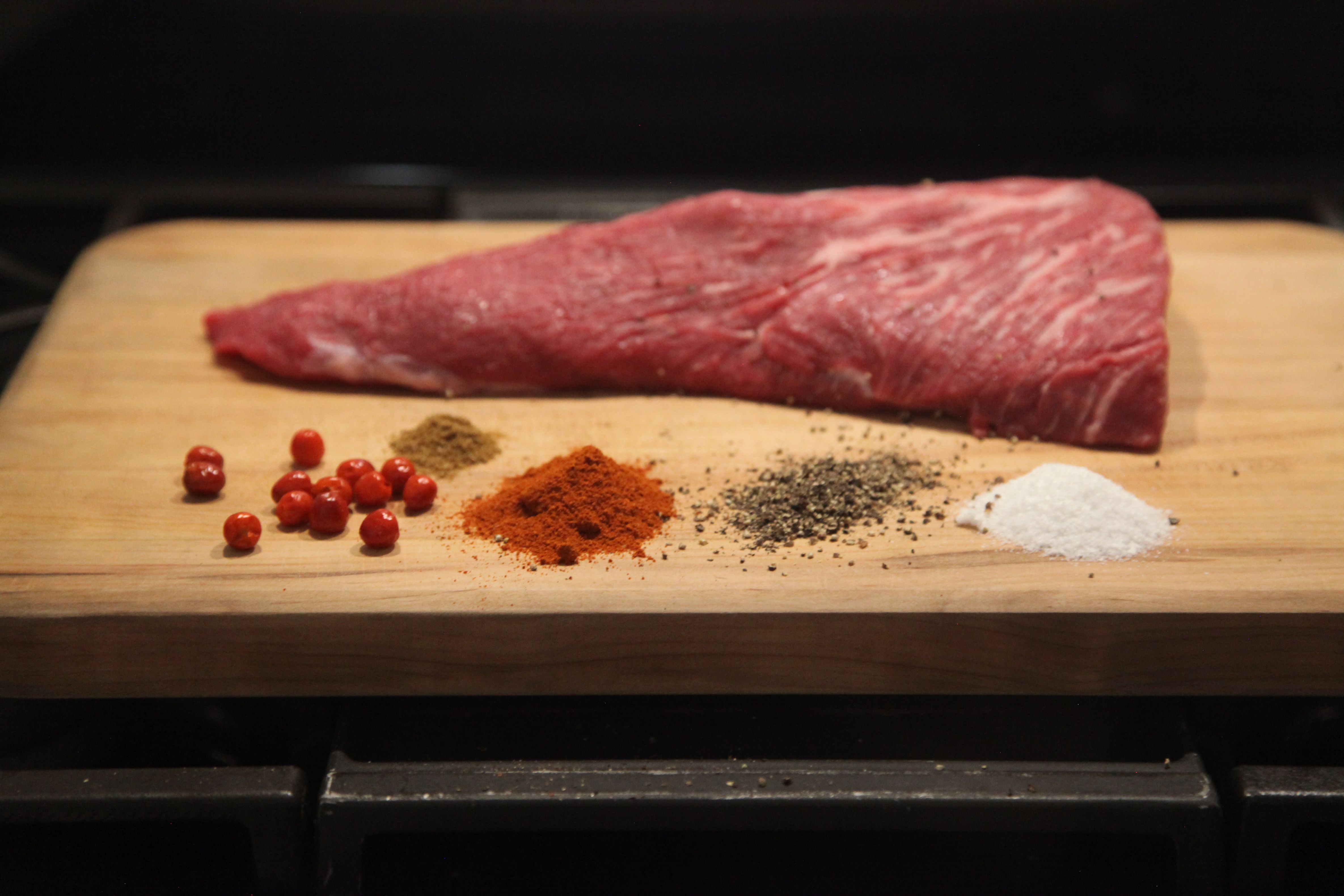
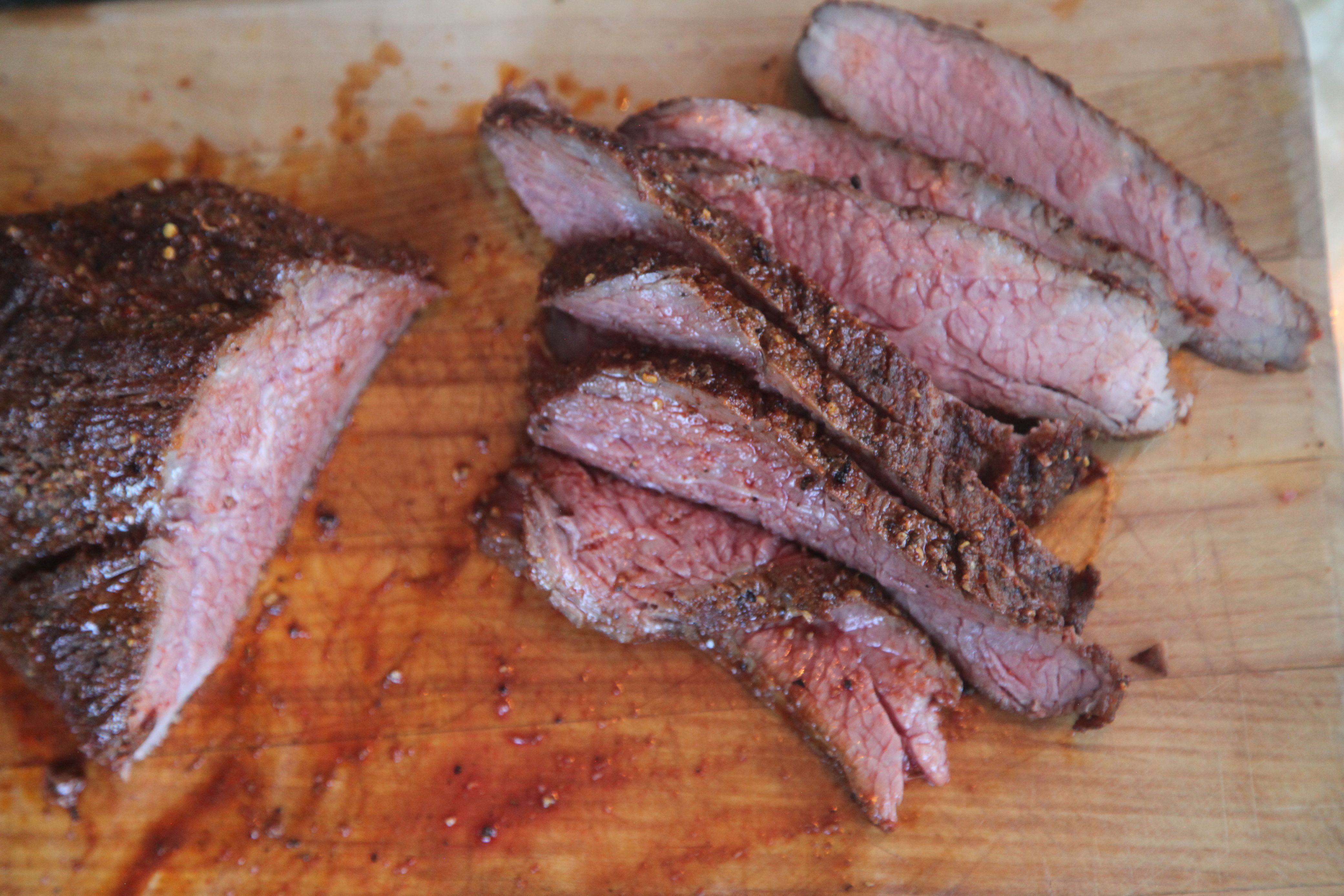
It's summer and we got summertime grillin' on our mind. That means tri-tip. This one starts the night before with a 24-hour dry brine, low roast in the oven, and finishes over a screaming hot grill. Cold leftovers the next day with a hit of lime are not an afterthought. It's all part of the plan.
Two Fires
Tri-Tip
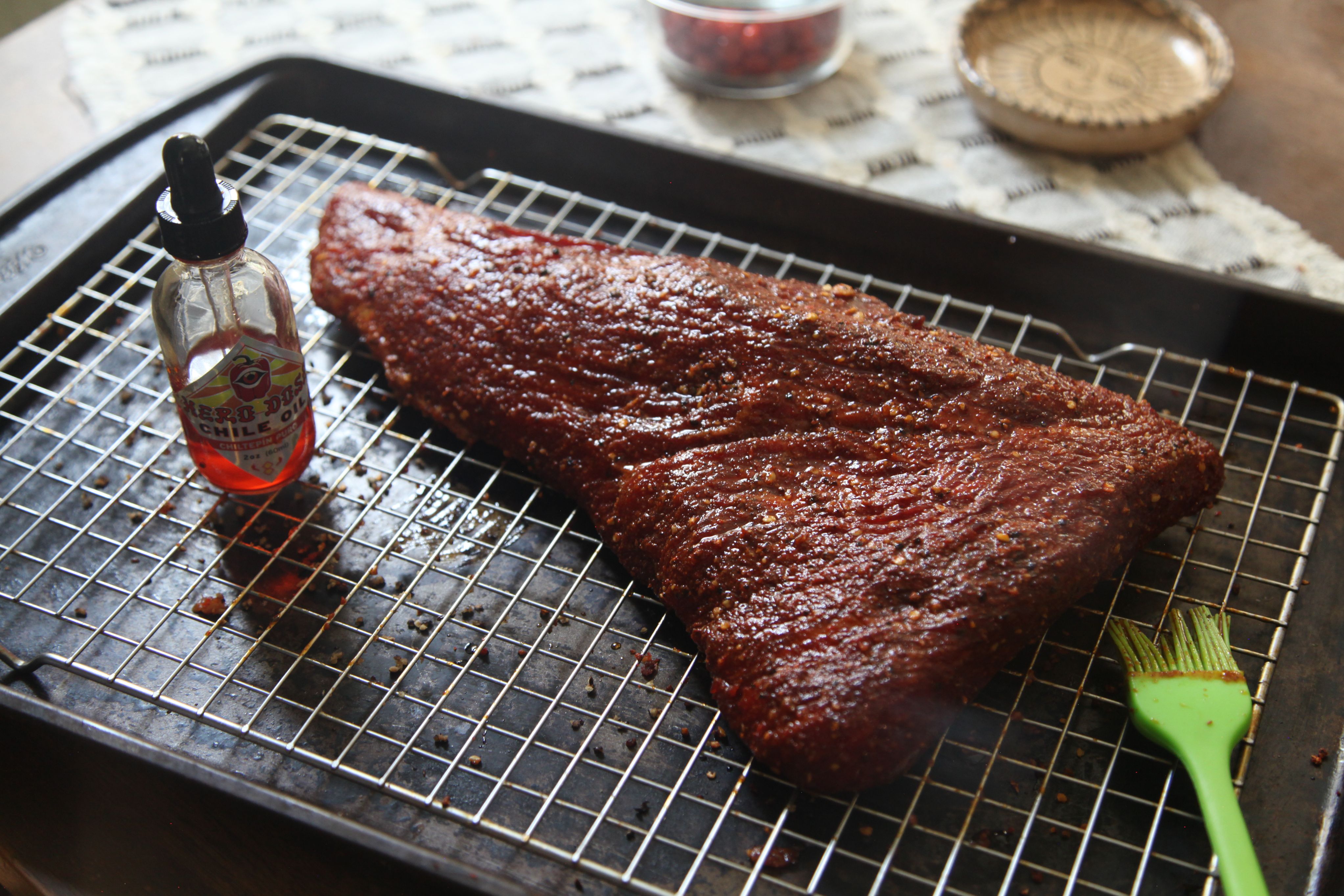
This is a tri-tip cooked twice — once low and slow in the oven to bring it to the edge of perfection, then finished on the grill to take it the rest of the way.
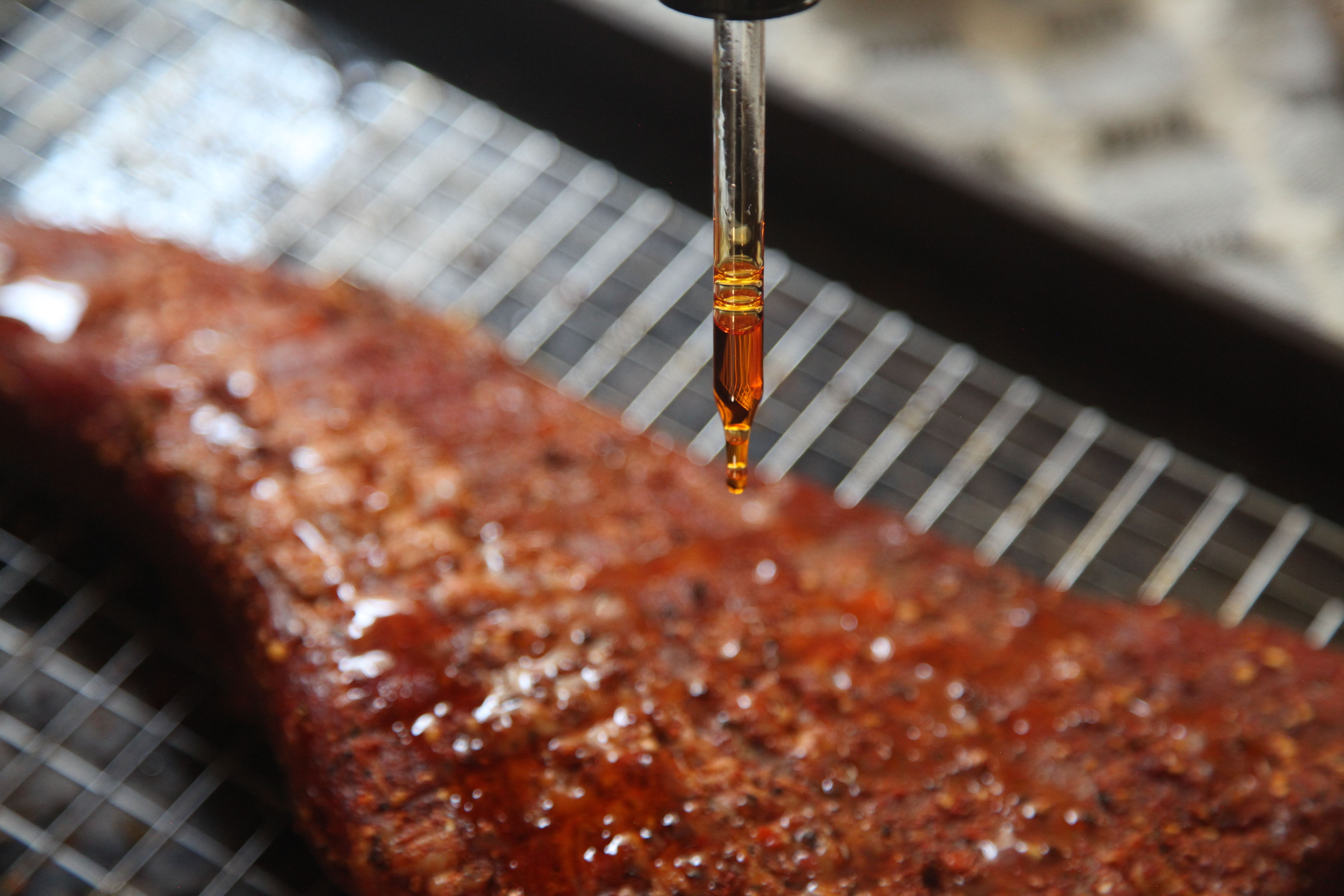
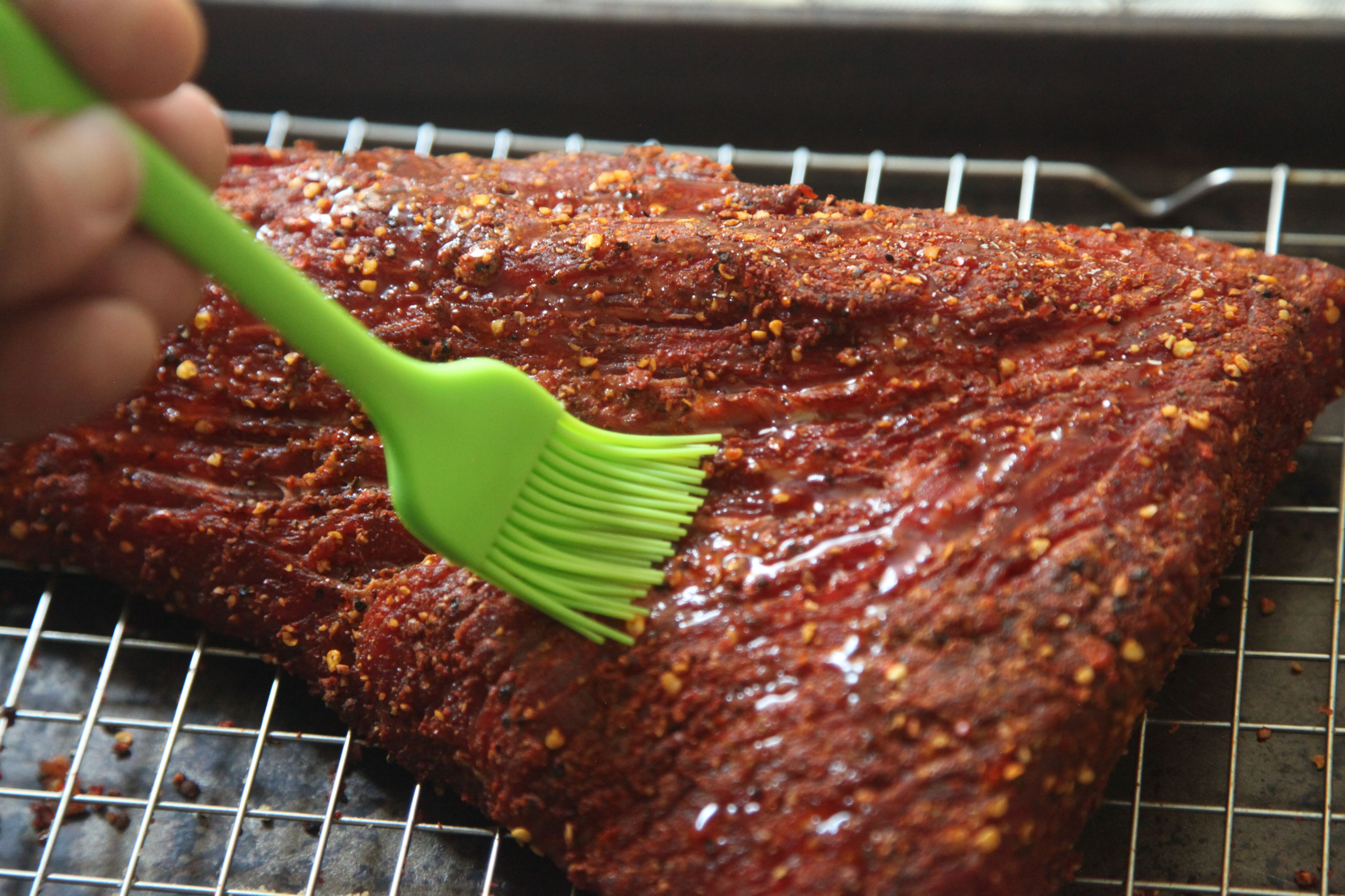
A word on the oil brush: a light coat of Hero Dose over the dry-brined surface before the oven roast keeps the meat moist through the long slow cook and helps the chile rub meld into the surface rather than just sitting on top of it. Don’t expect a crust at this stage — that’s not what the oven is for. The crust comes later, over fire or ripping hot skillet.
Ingredients:
2 to 3 lb tri-tip roast
1½ tsp kosher salt
1½ tsp freshly ground black pepper
2 tsp red chile powder
1 tsp dried chiltepín (ground)
½ tsp ground cumin
Hero Dose Chiltepín Puro Chile Oil — a light brush (up to 1oz) before the oven, and a generous drizzle after slicing
The day before:
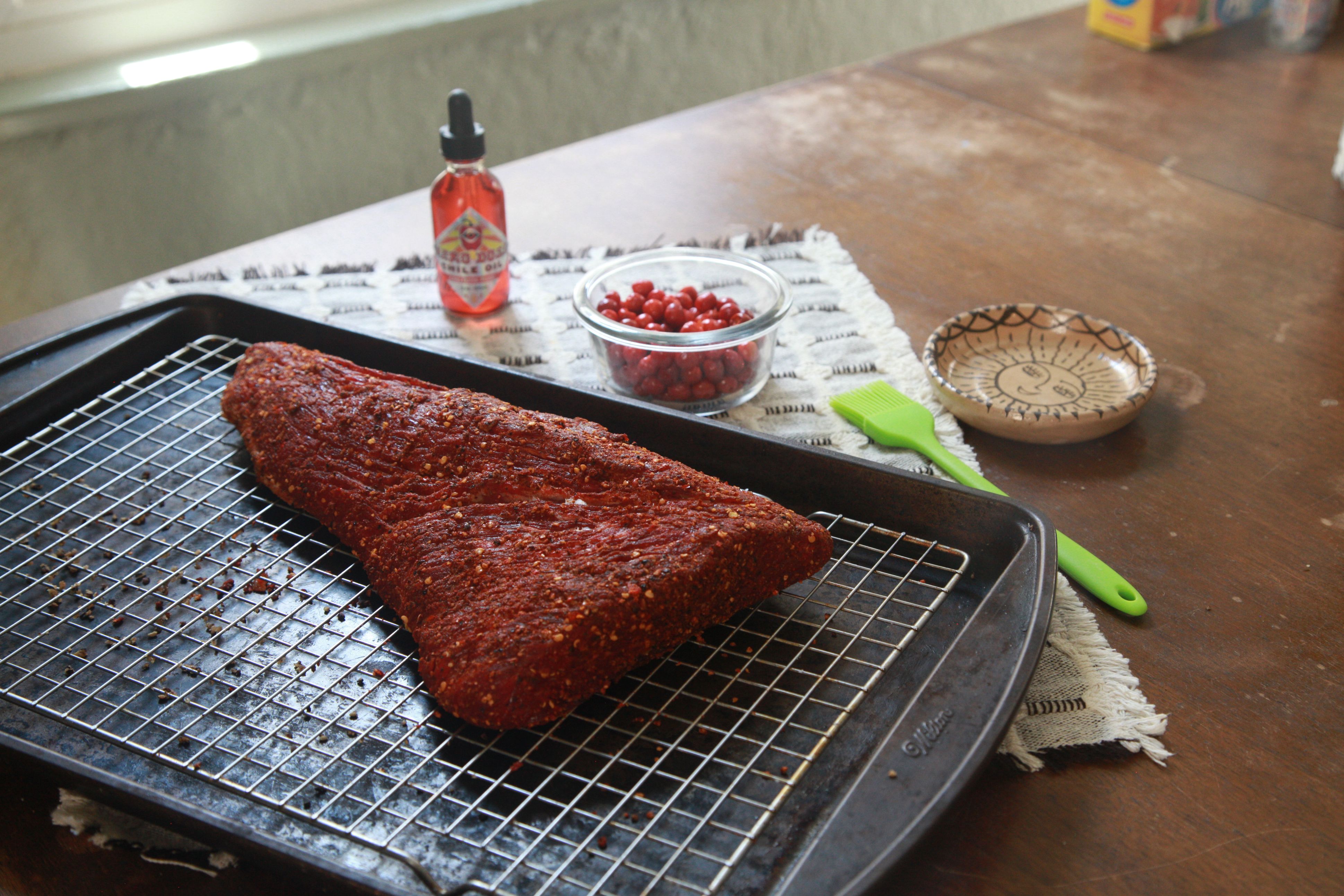
Mix salt, pepper, chile powder, and cumin. Rub all over the tri-tip. Set uncovered on a rack in the fridge for 24 hours.
When you’re ready:
Pull the tri-tip from the fridge 30 to 45 minutes before cooking. Brush lightly all over with Hero Dose chile oil. Set on a rack over a sheet pan.
Roast at 225°F. A 2 to 3 pound tri-tip will need 60 to 65 minutes — start checking with a thermometer around 50 minutes. Pull at 120 to 125°F internal remembering a ten degree carryover rise in temp.
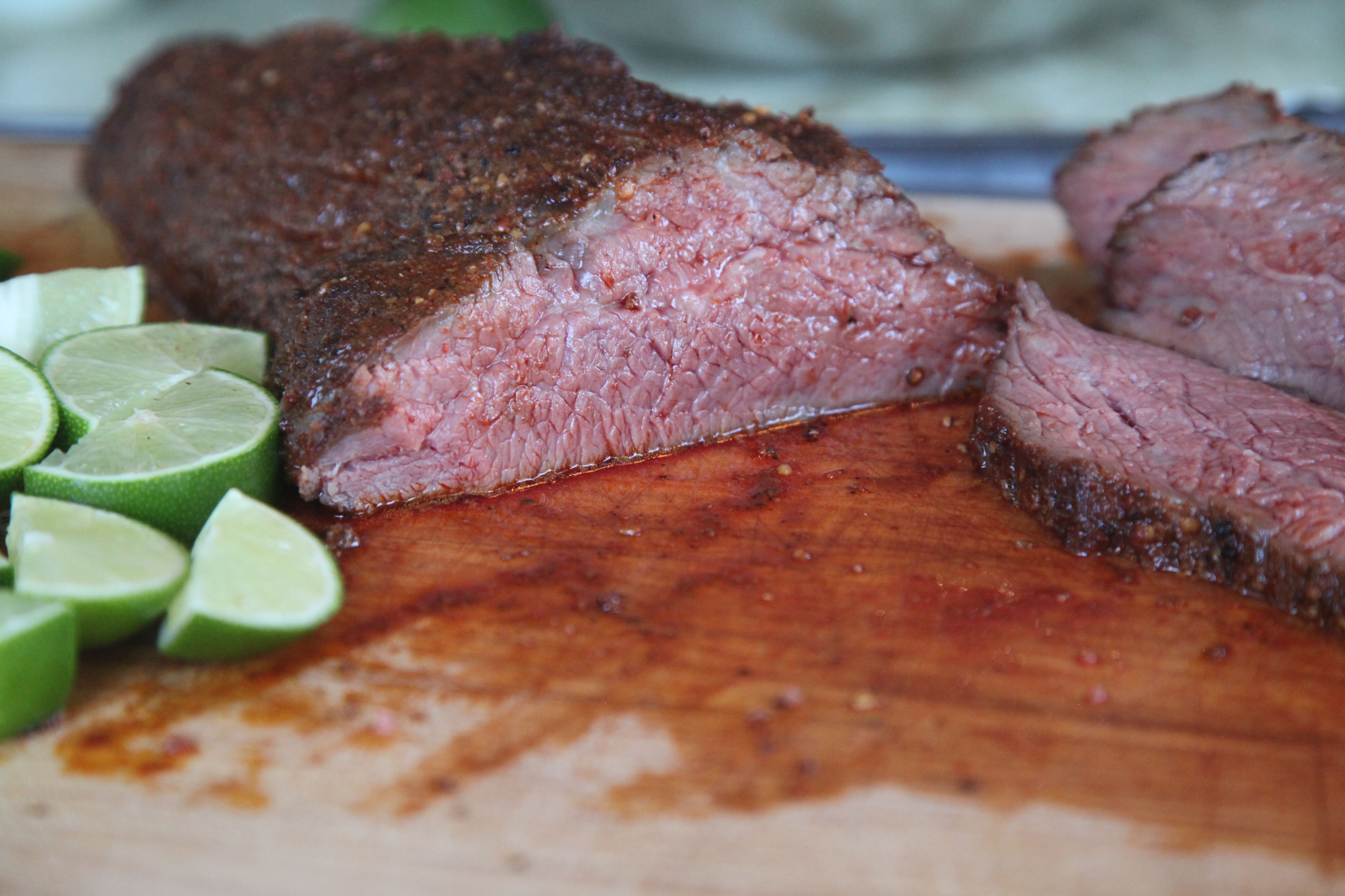
On a grill or ripping hot cast iron skillet: Sear the tri-tip 1 to 2 minutes per side over direct heat, just long enough to build a deep crust and get some char on the chile rub.
Rest loosely tented for 10 to 15 minutes, until internal temp climbs to around 135°F.
Slice against the grain, which may be difficult due to the noneuclidian internal geometry of the meat.
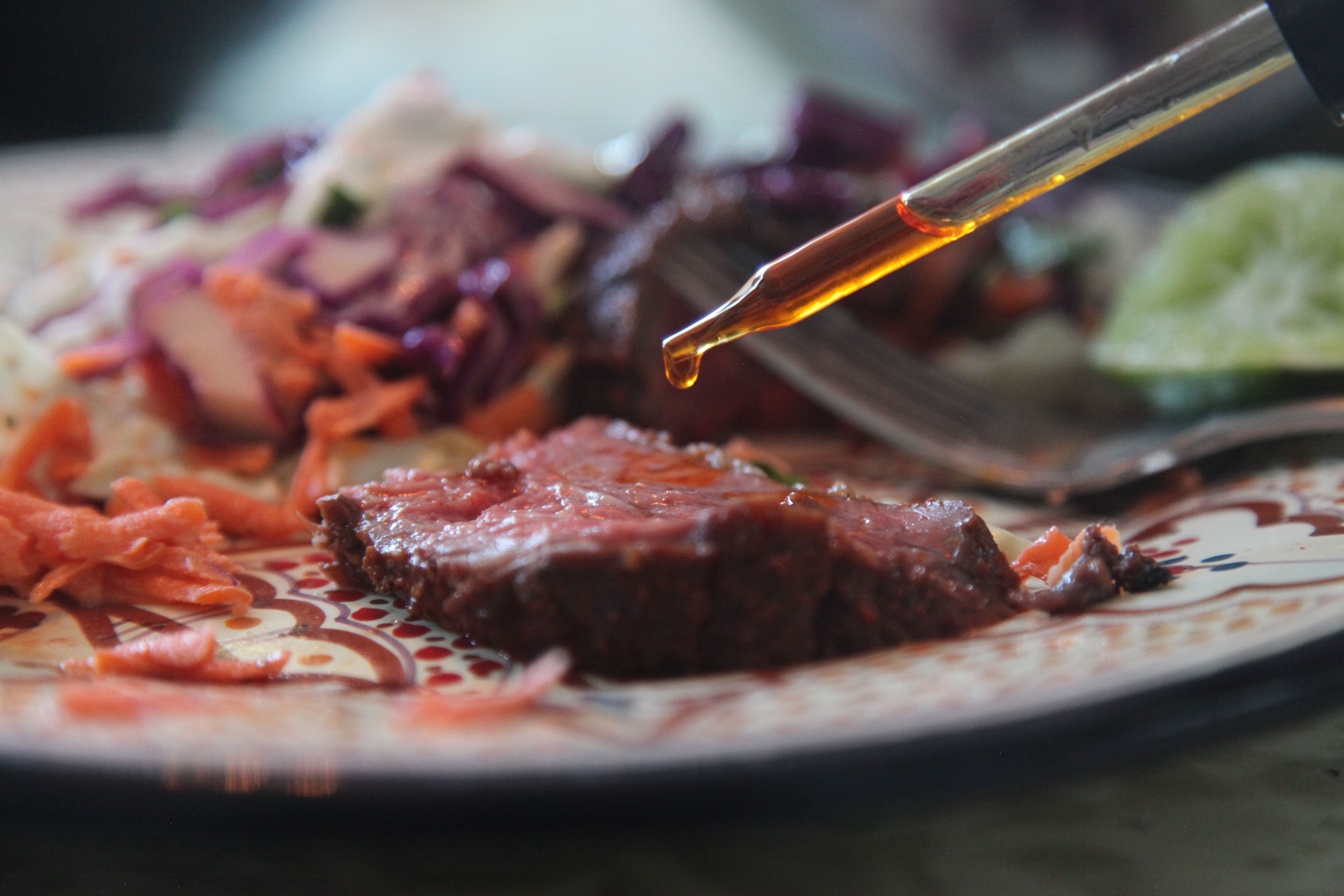
Drizzle Hero Dose over the sliced meat before serving.
Eat outside if possible.
Hero Dose
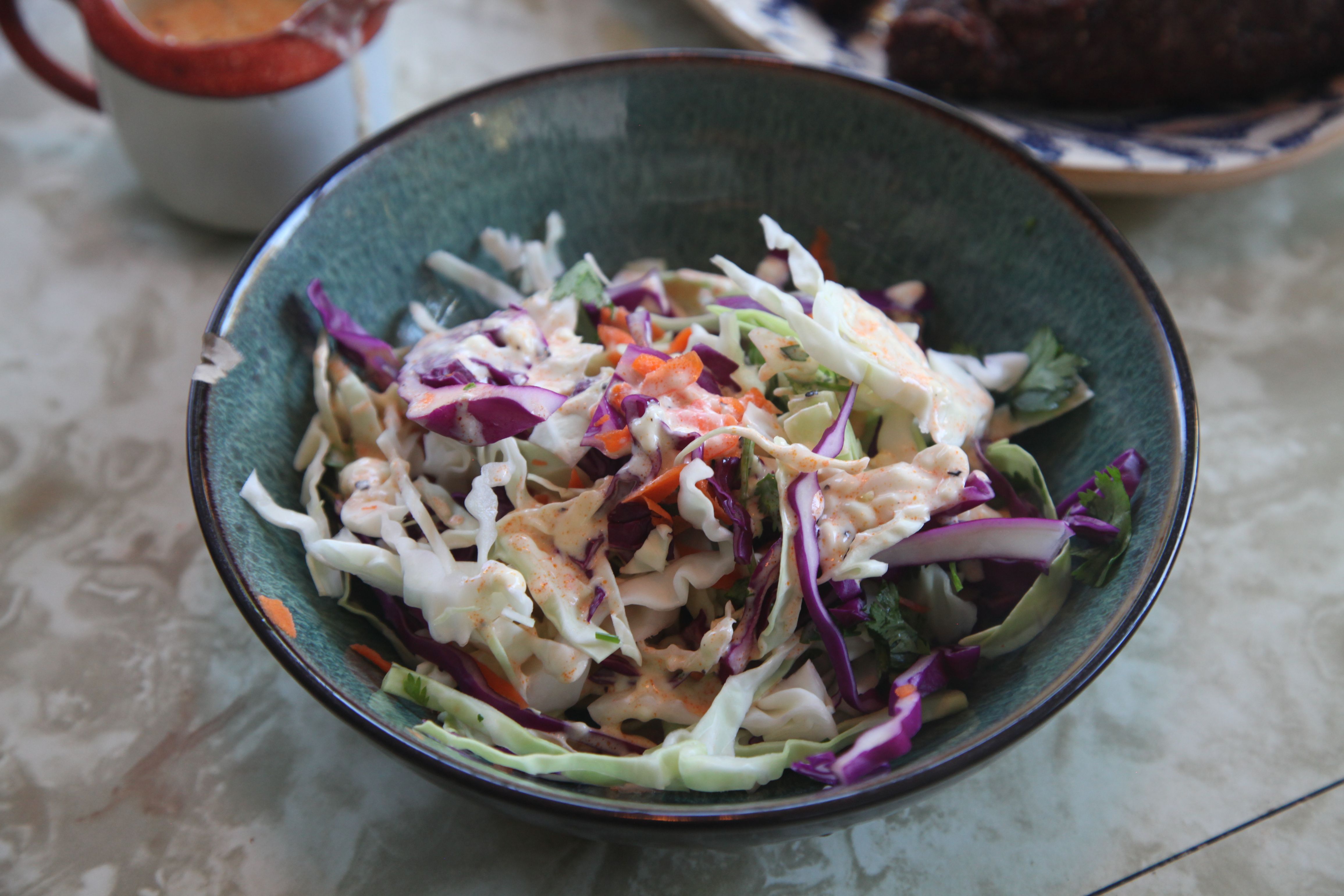
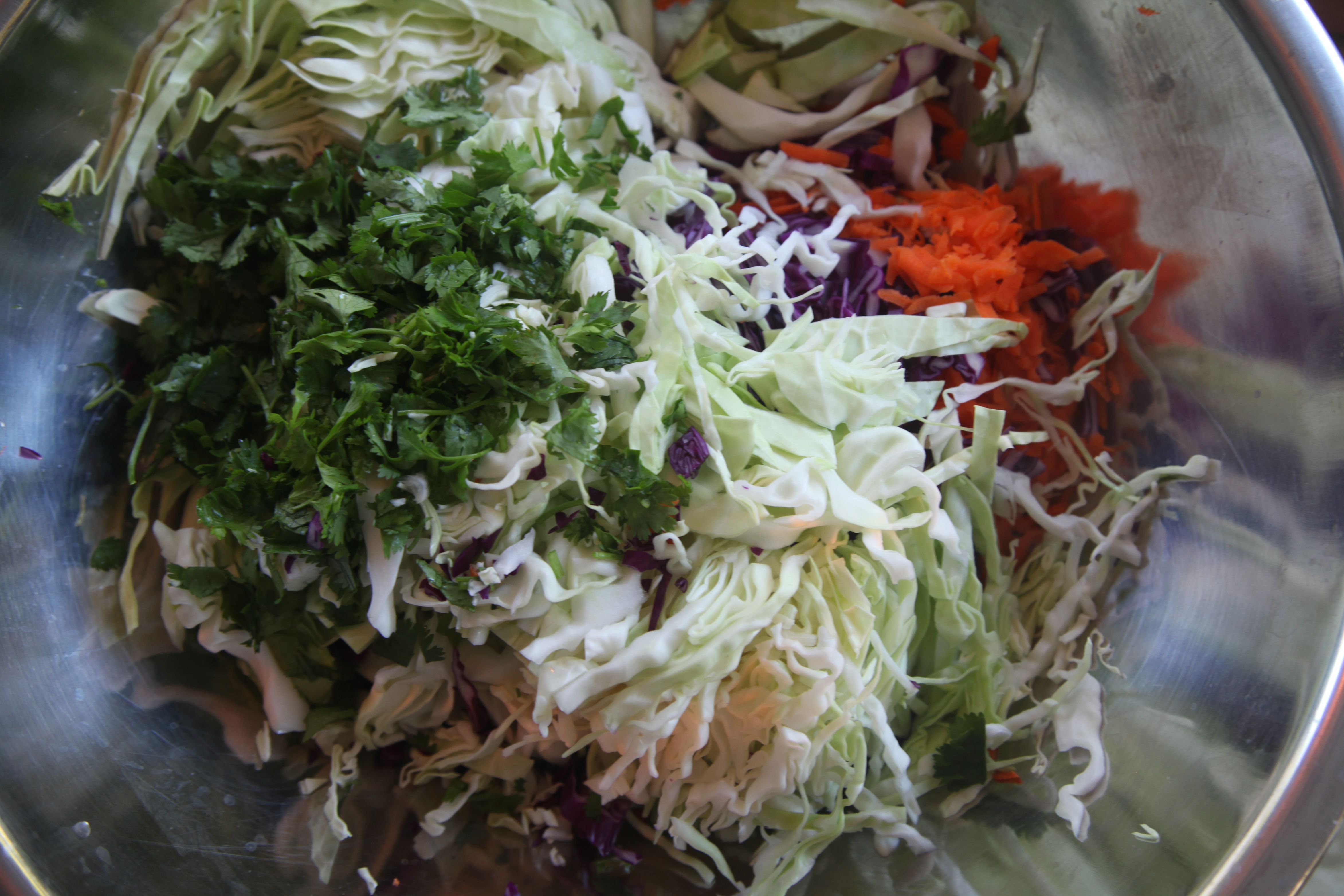
Chimayo Coleslaw
Cold, crunchy, creamy, spicy.
Ingredients:
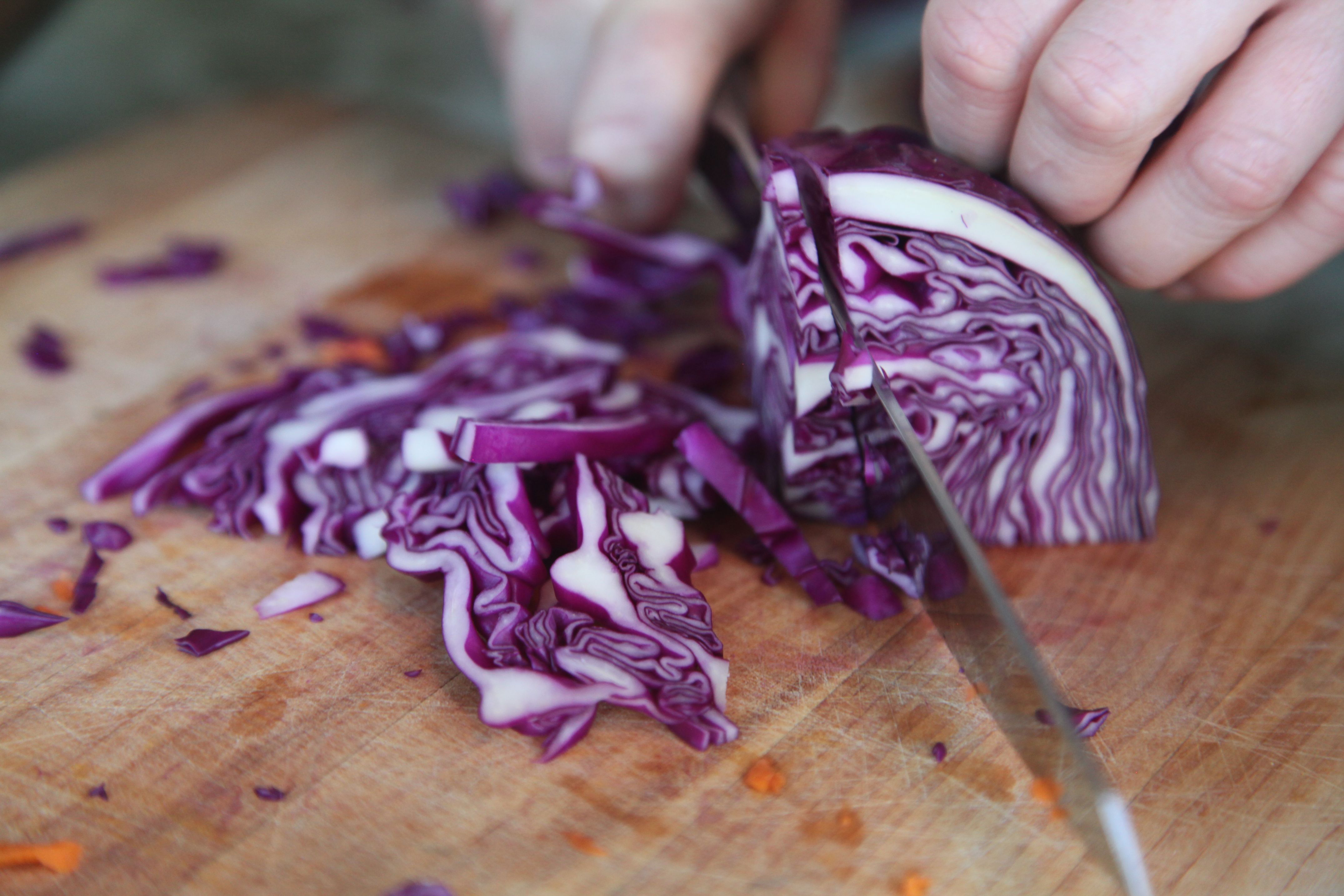
Half a green cabbage, sliced thin
Half a red cabbage, sliced thin
2 to 4 carrots, grated
A handful of cilantro (optional but encouraged)
For the dressing:
1/4 cup Mayo
Lime juice or apple cider vinegar
A spoonful of honey or sugar
Salt & Black pepper
Hero Dose Chimayo Heirloom Chile Oil
(or Chimayo Verde for a brighter tang)
Mix the cabbage, carrots, and cilantro in a large bowl. In a smaller bowl, stir together mayo, vinegar or lime, a little honey or sugar, salt, black pepper, and enough Hero Dose to make the dressing glow faintly with menace.
Dress the slaw before serving.
Good for days.
THE JULY RIDDLE
I am the smallest fire.
A feathered courier carried my seed across a continent.
I am older than your kitchen, older than your country.
Older than the idea of hot sauce.
I fit in the palm of your hand.
I will make you regret it.
What am I?
Answer in this month’s Blotter!
Did you know?
The Chiltepín is the only chile pepper native to the United States and has been spread almost entirely by birds for thousands of years — making it one of the oldest continuously used spices in North America.
Subscribe to The Blotter!
Get exclusive free updates, stories and recipes on our semi-regular newsletter.
Follow us on instagram @herodosechileco for more!